
Kirby's Dream Land 2+3 Is Getting an Unofficial PC Port With a Demo on May 30. We All Know How This Ends. That Doesn't Make It Less Worth Celebrating Right Now.
A solo developer is building native PC ports of Kirby's Dream Land 2 and Kirby's Dream Land 3 from decompiled source, with a playable demo scheduled for May 30. Nintendo has not yet responded. History says they will. The work matters anyway — because the preservation value of a decompilation survives the takedown that kills the download link.
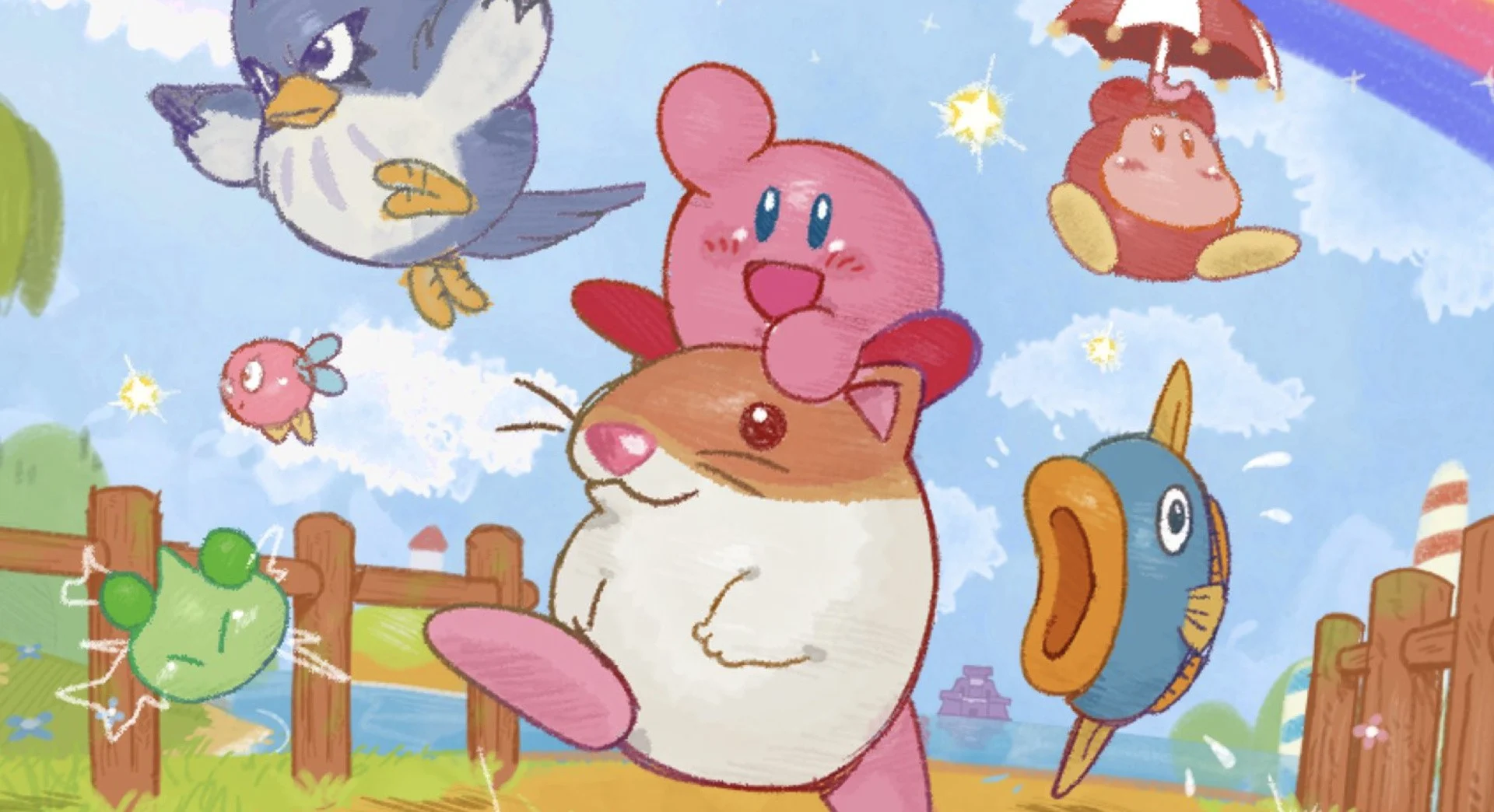
Someone is decompiling Kirby's Dream Land 2 and Kirby's Dream Land 3 — the 1995 Game Boy game and the 1997 SNES game, both developed by HAL Laboratory — and building native PC ports from the result. A playable demo is slated for May 30, 2026. The headline at Time Extension tells you everything you need to know about the mood: "We all know how this will end." They're right. And the project is still worth your attention — not because the demo will survive, but because what a decompilation produces is fundamentally different from what a download link provides.
The distinction matters. A ROM dump preserves a binary. A decompilation produces human-readable source code — reverse-engineered function by function, named variable by named variable — that can be compiled to any target. The ROM requires an emulator. The decompiled source doesn't require anything except a C compiler. That's why the Super Mario 64 decompilation project, years after its initial release, has spawned native ports on platforms Nintendo would never have sanctioned: PC, Android, Wii U homebrew, the Analogue Pocket via community forks. The binary is a snapshot. The decompiled source is a seed.
The Pattern Is Older Than the Debate
Fan-driven decompilation ports of Nintendo properties have a predictable lifecycle. Announcement generates excitement. The community contributes testing, documentation, bug reports. Nintendo's legal team sends a cease-and-desist or DMCA takedown. The public-facing download disappears. The code, already forked across dozens of repositories and mirrored on platforms Nintendo's lawyers would need a year to enumerate, persists.
This is exactly what happened to AM2R — the fan-built Metroid II remake that Time Extension's coverage explicitly invokes as a parallel. AM2R got a DMCA takedown in 2016, the same week Nintendo launched Metroid: Samus Returns for 3DS. The original download link is dead. The game is easier to find now than it was then. The same pattern repeated with Prime 2D, the fan-made 2D reimagining of Metroid Prime. Nintendo sent the letter. The project went underground. The builds are still circulating.
The Kirby ports follow the same lineage as the Super Mario 64 and Ocarina of Time decomp projects — and, more recently, the N64 recomp wave that has been one of the most consequential preservation developments of the past two years. The difference is scope. SM64 and OoT are flagship titles with deep technical documentation; their decomps attracted large teams. Kirby's Dream Land 2 and 3 are mid-shelf platformers — beloved, technically accomplished (DL3's SNES color work is genuinely beautiful), but not the kind of games that generate hundred-person decomp teams. This appears to be substantially a solo effort.
Why These Two Games
Kirby's Dream Land 2 (1995, Game Boy) and Kirby's Dream Land 3 (1997, SNES) sit in a peculiar corner of HAL Laboratory's catalog. They're the games between the Kirby that everyone played (Kirby's Dream Land, the 1992 Game Boy original) and the Kirby that everyone canonizes (Kirby Super Star, the 1996 SNES cooperative classic). DL2 introduced the animal friends — Rick the hamster, Coo the owl, Kine the fish — who combined with Kirby's copy abilities to create a combinatorial puzzle system the series hasn't fully revisited since. DL3 extended that system with a pastel-crayon art style that pushed the SNES's color palette harder than almost any other late-era title on the platform.
Both games are available on Nintendo Switch Online. That's Nintendo's position: the official channel exists, the preservation is handled, the fan port is unnecessary. The counterargument writes itself. Switch Online requires a subscription, runs on Nintendo's emulator, and disappears when the service shuts down — a when, not an if, as every previous Nintendo online service has demonstrated. A native PC port compiled from decompiled source runs independently of any service, any subscription, any corporate decision about how long a storefront stays lit.
"The ROM is a snapshot. The decompiled source is a seed. One survives a takedown. The other doesn't have to."
The Cease-and-Desist Is the Least Interesting Part
Time Extension's framing — "we all know how this will end" — is accurate but incomplete. Yes, Nintendo will almost certainly act. The company's enforcement record is among the most aggressive in the industry. But framing the story as "fan makes thing, Nintendo kills thing, everyone is sad" misses the structural shift that decompilation projects have introduced over the past five years.
A cease-and-desist can kill a download link. It cannot un-decompile source code. Once a game's logic has been reverse-engineered into portable C, the knowledge exists independently of any single distribution point. The SM64 decomp taught the scene this lesson. The Zelda decomps reinforced it. The recomp pipeline — which takes decomp output and recompiles it for modern hardware with enhancements — turned it into a reproducible workflow. Every new decompilation that reaches a functional state adds another title to the catalog of games that cannot be lost to platform death, service shutdown, or corporate indifference.
That's the real story here. Not whether a demo on May 30 will still be downloadable on June 30. Whether the decompilation work — the months or years of reverse engineering that produced human-readable source from a raw binary — has reached a state where the knowledge persists regardless of what Nintendo's lawyers do next.
The Community Already Knows the Score
Reaction on social media has been a mixture of genuine excitement and resigned anticipation. Community signals on Twitter from May 19 show the scene already treating this as a countdown with two clocks: one ticking toward the demo, the other toward the takedown. That dual awareness — celebration and fatalism in the same breath — has become the default emotional register for Nintendo fan projects. It shouldn't have to be.
Nintendo has every legal right to protect its IP. That's not the argument. The argument is that a company sitting on thirty years of catalog titles, many of which have no active commercial release outside a single subscription service on a single platform, is making a choice about access that the fan community is filling by default. The ESA's position on ownership — articulated most recently in the California legislative fight — is that access is a license, not a right. The decomp scene's position is that access is an engineering problem, and engineering problems have solutions that don't require permission.
What Happens on May 30
If the demo ships on schedule, it will be the first publicly playable native PC build of either Kirby's Dream Land 2 or 3. Per Time Extension's coverage, the demo is intended to showcase the decompilation's progress — a proof of functionality, not a finished product. The full ports are presumably further out.
The window between demo release and takedown is the window that matters for the community. During that window, the build gets tested, forked, mirrored, documented. The migration patterns the scene has developed over the past year — anonymized hosting, distributed mirrors, separation of source from binary — mean that even a fast takedown may not accomplish what it once did. The infrastructure for surviving legal pressure has matured alongside the decompilation toolchain itself.
None of this makes the developer's position safe. Nintendo's enforcement arm has shown willingness to pursue individuals, not just distribution points. The personal risk is real and shouldn't be romanticized. But the structural reality remains: the knowledge a decompilation produces is harder to suppress than the binary it replaces. Every title that gets decompiled to a portable, compilable state becomes, in a meaningful sense, preserved — regardless of what happens to the people who did the preserving.
Download the demo on May 30 if you can. Celebrate the work. Understand the risk the developer is taking. And understand that the most important product of this project isn't a playable build — it's a set of source files that will outlast whatever legal response follows.
We all know how this ends. That's exactly why it matters that someone started it anyway.
If this piece changed how you think about decompilation as preservation, share it with someone who still frames fan ports as piracy.