
A WiFi Card for the Mega Drive Just Launched on Kickstarter. There's a Catch That Tells You Everything About Who This Is Actually For.
MegaWiFi is an ESP32-based WiFi addon that slots into a Sega Genesis / Mega Drive cartridge and gives a 37-year-old console a TCP/IP stack. It just launched on Kickstarter. It promises online multiplayer on original hardware — no emulation, no FPGA, no modern intermediary. The catch: there are almost no games that use it yet, because the games have to be written from scratch by homebrew developers who adopt the open-source API. That's not a flaw in the pitch. It's the entire point. MegaWiFi isn't a product for players. It's infrastructure for a scene that's still building the library it wants to play.
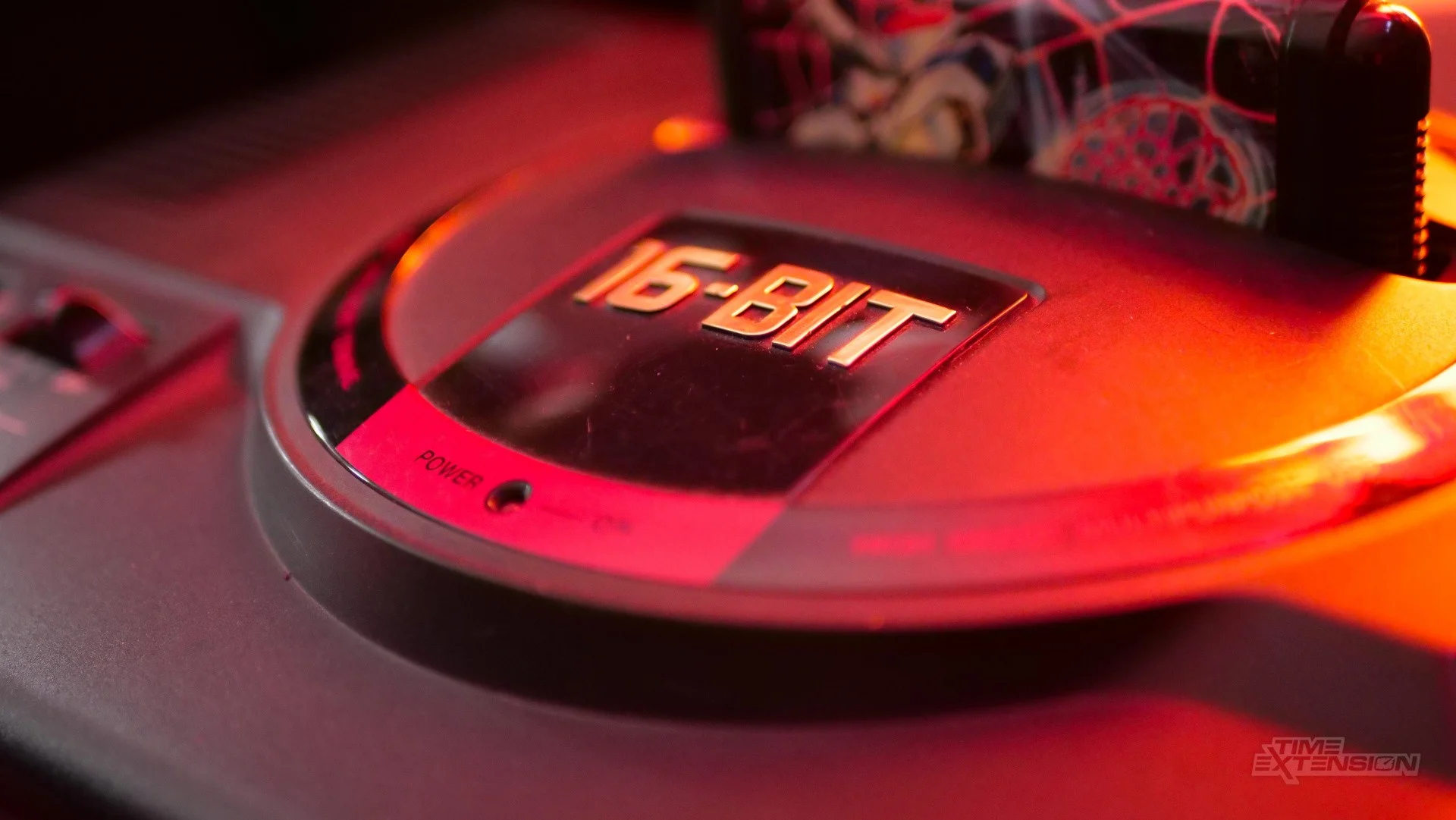
The Sega Genesis shipped in 1988. It had a Motorola 68000, a Z80 coprocessor, 64 kilobytes of main RAM, and exactly zero network capabilities. The Sega Meganet and Sega Channel experiments happened later, tethered to proprietary infrastructure that evaporated with Sega's retreat from the hardware market. For three decades, "online Mega Drive" was a historical footnote. Now doragasu — the developer behind MegaWiFi — is proposing to rewrite that sentence with an ESP32 wired into a standard cartridge PCB, and a Kickstarter campaign asking the scene to fund it.
Per Time Extension's coverage, MegaWiFi integrates an Espressif ESP32 module onto a Genesis-compatible cartridge board. The ESP32 handles WiFi connectivity and exposes a TCP/IP stack to the 68000 through memory-mapped registers — the same bus the console already uses to talk to cartridge ROM. The Genesis doesn't need modification. The addon rides the cartridge slot the way Game Genie did, except instead of patching opcodes it patches the console's relationship with the outside world.
The hardware repository on GitHub is open-source. Schematics, firmware, and a C API for homebrew developers are all public. This is not a black-box peripheral with a proprietary SDK hidden behind an NDA. It's a documented bus interface with example code. The project is inviting the Mega Drive homebrew community — a community that already produces competition-grade entries for events like the Sega Genesis homebrew competition — to build software that talks to it.
MegaWiFi doesn't ship with a killer app. It ships with a compiler flag.
Here's the catch, and it's the one that separates MegaWiFi from a consumer product: almost nothing runs on it yet. Per Time Extension, demonstration software exists — basic connectivity proofs, a chat client, fragments that show the TCP/IP handshake working on real hardware. But there is no marquee game. No online Sonic. No networked Streets of Rage. The library that would justify this purchase for a player does not exist. It has to be written, by developers who choose to target the MegaWiFi API, on a platform whose entire active development community numbers in the low hundreds at most.
That's not a criticism. It's the diagnostic. MegaWiFi is scene infrastructure, not a consumer peripheral. The Kickstarter is asking for money to manufacture a tool so that homebrew developers can build things that don't exist yet. The backers aren't buying an experience. They're buying a capability — a TCP/IP socket on a 37-year-old cartridge bus — and betting that someone in the community will do something brilliant with it.
The precedent that matters
This isn't the first time a homebrew hardware project has shipped the bus before the software. The Overserved project for the Neo Geo faced a structurally identical proposition: new cartridge hardware enabling capabilities the original platform never had, with the game and the cartridge co-developed as a single artifact. The difference is that Overserved shipped the game with the hardware. MegaWiFi is shipping the hardware and hoping the games follow.
That's a riskier bet, and a more interesting one. Overserved proved that the scene can manufacture and distribute custom cartridge hardware at small scale. MegaWiFi is testing whether the scene can sustain a platform — a shared hardware standard that multiple developers build against over time. The distinction matters because a platform without software is a paperweight, and a platform with one game is a novelty. The threshold MegaWiFi needs to cross is two or three genuinely compelling homebrew titles that require the WiFi card to function. Below that threshold, it's a technical proof of concept. Above it, it's the foundation of something the Genesis never had.
Why the open-source bet is load-bearing
The decision to publish everything on GitHub is not incidental to MegaWiFi's viability — it is the viability argument. A closed-source WiFi cartridge for the Mega Drive would die on arrival. The Genesis homebrew scene is small, technically literate, and allergic to vendor lock-in. Developers who write 68000 assembly for fun are not going to adopt a networking stack they can't inspect, modify, and fork. Open hardware and open firmware are the minimum credible offer.
Per the mw-cart repository, doragasu has published board schematics, the ESP32 firmware source, and a C-language API that wraps the memory-mapped register interface into something a homebrew developer can call from SGDK (the open-source Sega Genesis Development Kit that powers most modern Genesis homebrew). The API abstracts the WiFi handshake, socket management, and data transfer behind function calls that look familiar to anyone who's written network code on a modern platform. The 68000 side doesn't need to know it's talking to an ESP32. It just reads and writes to mapped addresses.
This is the right architecture. It's also the architecture that makes MegaWiFi fragile, because it means the project's success depends entirely on whether other people decide to write code against it. doragasu can't will a library into existence. The Kickstarter can fund the PCBs. It can't fund the games.
The Sega Channel ghost
Sega tried online connectivity for the Genesis once before. The Sega Channel, launched in 1994 through a partnership with TCI and Time Warner Cable, delivered games over coaxial cable to a cartridge-shaped adapter. It reached roughly 250,000 subscribers in the U.S. before shutting down in 1998. The Sega Meganet service in Japan and Brazil used dial-up modems built into a dedicated peripheral. Both services died with their infrastructure. When the servers went dark, the hardware became inert.
MegaWiFi sidesteps the infrastructure dependency by design. Per the repository documentation, the cartridge connects to standard WiFi networks and communicates over TCP/IP — the same protocol stack that runs the internet. There's no proprietary Sega server in the loop. A homebrew developer can point a MegaWiFi game at any server they control, including one running on a Raspberry Pi in their apartment. The infrastructure is whatever the developer provisions. When the Kickstarter backer's WiFi router dies in fifteen years, they replace the router, not the protocol. That's the structural difference between MegaWiFi and Sega Channel: the dependency is on a standard, not on a company.
Whether that matters depends on whether anyone builds something worth connecting to.
Who this is for — precisely
The honest audience for MegaWiFi, today, in May 2026, is a Genesis homebrew developer who already has a project in mind and needs a networking layer, or a hardware collector who backs scene infrastructure on principle, the way people donate to MAME or fund MiSTer core development without expecting a personal deliverable. The audience is not a player who wants to play online Genesis games tonight. That player does not have games to play.
That's fine. It's also the thing the Kickstarter page has to be honest about, and the thing coverage of this project has a responsibility to foreground. The worst outcome for MegaWiFi is a wave of backers who expect a consumer product and receive a dev kit. The best outcome is a funded manufacturing run that puts enough cartridges in enough developers' hands that the library bootstraps itself — the way the original Genesis homebrew scene bootstrapped itself from SGDK and a handful of tutorials into a community that now produces dozens of games a year.
The Kickstarter isn't selling online Mega Drive games. It's selling the possibility that online Mega Drive games could exist. That's a different product, and it deserves a different kind of attention.
Scene tooling has always worked this way. The tool arrives before the art it enables. SGDK existed before the games people wrote with it. The GF1 Neptune FPGA project is building hardware for a console Sega never shipped, and the justification is the same: the capability is worth having even before the library catches up. MegaWiFi is asking the same question every piece of scene infrastructure asks: if we build it, will they come?
The answer is usually yes, eventually, in numbers that don't look impressive by commercial standards but matter enormously to the people involved. A WiFi-enabled Genesis homebrew game that lets eight people in four countries play a custom multiplayer title on 37-year-old hardware, over the actual internet, running on actual Motorola 68000 silicon — that's worth the Kickstarter price to the community that would build it. Whether it's worth it to you depends on whether you think you're buying a product or funding a possibility. MegaWiFi is the latter. The campaign should say so clearly, the coverage should report it clearly, and the backers should know what they're holding.
Back the campaign or browse the source? The MegaWiFi hardware repo is open on GitHub — schematics, firmware, API. If you write 68000 and you've been waiting for a networking layer, this is your invitation. If you're a backer, know what you're backing: infrastructure, not a finished product. That's not a warning. It's a compliment to the ambition.