
The Same Developer Just Put Symphony of the Night and Animal Crossing on a Game Boy Color — and Both of Them Work
Gospel of Belmont is the Castlevania demake that Konami never dared to make. Richter Wilker built it for the Game Boy Color — four colors per tile, a Z80 processor, and a screen the size of a postage stamp. He built an Animal Crossing GBC demake in the same window. One developer, two impossible ports, both running on real hardware.
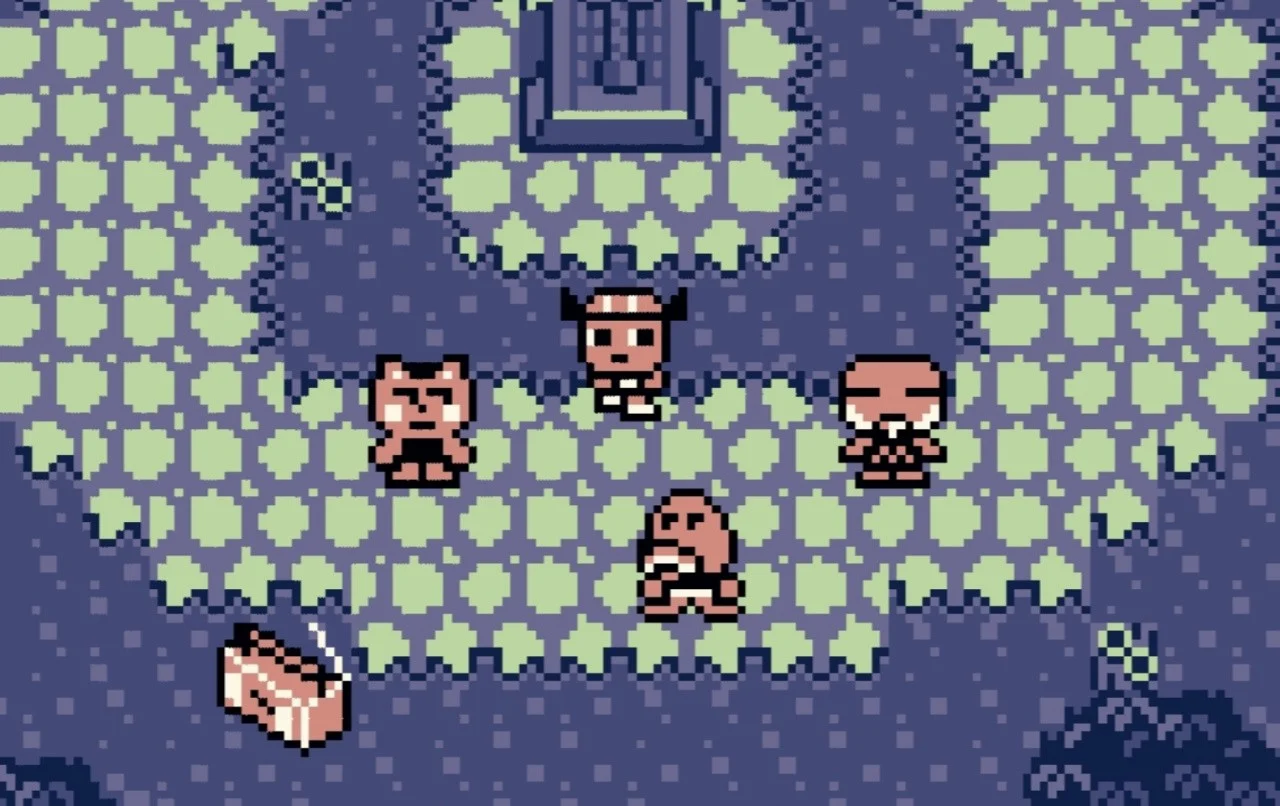
Richter Wilker has released Gospel of Belmont, a Game Boy Color demake of Konami's Castlevania: Symphony of the Night, alongside a separate GBC demake of Nintendo's Animal Crossing. Per Time Extension's reporting, both are playable homebrew ROMs that run on original Game Boy Color hardware. One developer. Two of the most beloved games of the late '90s and early 2000s. A platform that was never supposed to hold either of them.
Why This Week
The timing here matters for a reason that has nothing to do with release calendars. We just covered the MiSTer's unofficial NES core that finally delivers the VRC6 expansion audio Konami stripped from the Western release of Castlevania III in 1989. That piece was about a franchise whose identity was shaped — and in some cases damaged — by hardware limitations imposed at the regional level. Gospel of Belmont inverts the question: what happens when a developer voluntarily accepts the most punishing hardware constraints of the Game Boy Color era and tries to reconstruct one of the most technically ambitious PlayStation games ever shipped?
The answer, per Time Extension's coverage: it works. Not as a proof-of-concept tech demo, not as a single-room mockup — as a functional game with Alucard, the castle, and the Metroidvania progression loop that Symphony of the Night invented (or at least named). The Game Boy Color's Z80-derived CPU runs at roughly 4.19 MHz. The original PlayStation's R3000A runs at 33.87 MHz. The ratio is not subtle. What Wilker has done is not a port. It's a translation — the kind that requires understanding not just what the original game does but what it means, so you can rebuild that meaning in a vocabulary eight times smaller.
The Work Itself
The Game Boy Color's display is 160×144 pixels, four shades per palette line, with a maximum of eight sprites per scanline. Symphony of the Night on PlayStation uses 320×240 minimum, often pushing well beyond with transparency layers, rotation effects, and a sprite system that treats the VRAM ceiling as a suggestion. Demaking it for the GBC means every room has to be re-thought at the tile level. Per Time Extension, Wilker has rebuilt the castle architecture, the enemy patterns, and the progression structure to fit within the GBC's memory and rendering constraints — not by cutting content but by redesigning it for the platform's native grammar.
The Animal Crossing demake operates on different terms. The original is a GameCube title — a real-time social simulation that depends on the system clock, seasonal cycles, and an inventory system with hundreds of items. Compressing that into a GBC cartridge image is a different kind of impossible. Where Gospel of Belmont has to translate action and spatial complexity, the Animal Crossing demake has to translate systems and time. Both are acts of compression that require the developer to decide what the original game's irreducible core actually is — and then build only that, cleanly, in hardware that offers no margin for waste.
"A demake is a thesis statement about what a game actually is. You can't shrink everything. You have to choose what survives."
The name is worth pausing on. Gospel of Belmont is not Castlevania GBC or SotN Pocket Edition. It's a title that positions the project as scripture — the distilled teaching of the original, passed down in a smaller, older form. That's not accidental branding. That's a developer who understands that a demake, done right, is a critical reading of the source material. Every room that makes it into the GBC version is an argument about what mattered in the PlayStation original. Every room that doesn't is an argument too.
The Developer
Richter Wilker is a homebrew developer whose work across both projects demonstrates a specific and unusual fluency: the ability to move between genres and design paradigms while staying within a single, tightly constrained hardware target. Building one GBC homebrew that works is a project. Building two, simultaneously, in completely different genres — one an action-platformer with RPG progression, the other a life simulation with real-time systems — is a statement about craft. Per Time Extension, both ROMs run on original hardware, which means they've been tested against the actual silicon, not just an emulator's approximation of it.
This is the kind of work that the homebrew scene produces at its best: not nostalgia, not pastiche, but genuine new development for old platforms. The Game Boy Color's toolchain is well-documented in 2026 thanks to projects like GBDK-2020 and community efforts around the Pan Docs, but documentation doesn't write the game for you. The constraints are real. The palette limitations are real. The sprite-per-scanline limit is real. Working within them and producing something that reads as a coherent adaptation of a 32-bit console game is a technical achievement that deserves to be called what it is.
Where to Find It
Time Extension's coverage links to Wilker's releases. Both Gospel of Belmont and the Animal Crossing GBC demake are available as ROM files — playable on original Game Boy Color hardware via flash cart, or through GBC-compatible emulators and FPGA cores. If you've got an Analogue Pocket with the GB/GBC core, or a MiSTer running the Game Boy core, these are exactly the kind of homebrew that those platforms were built to serve. The ROMs are the artifact. The hardware you choose to run them on is your business.
Where This Sits
Symphony of the Night has been ported officially exactly once in a way that mattered — the PSP's Dracula X Chronicles included a slightly modified version in 2007. Konami has since re-released it on various digital storefronts, but always as the PlayStation original, emulated. They have never attempted to rebuild it for weaker hardware. They never made the Game Boy Advance Symphony of the Night that fans spent a decade hoping for. The three GBA Castlevanias — Circle of the Moon, Harmony of Dissonance, Aria of Sorrow — are original games that learned from SotN's structure, but none of them tried to be it on smaller silicon.
Richter Wilker just did what Konami wouldn't. On hardware weaker than the GBA. That's not a flex. That's a service — to the game, to the platform, and to the idea that the best way to honor a classic is to prove it can survive compression down to its essentials. Gospel of Belmont is the demake as critical essay, and the Game Boy Color is its peer-reviewed journal.
If this piece connected, share it with someone who's been arguing about which GBA Castlevania is the best one. The answer might be on a different handheld entirely.