
The AI Data Center Ate the Retro Handheld. RAMageddon Is Killing Boutique Hardware — and the Makers Most Committed to Authentic Retro Ratios Are Paying the Highest Price.
AYANEO is raising prices again and discontinuing handhelds mid-cycle. The cause isn't mismanagement — it's a global LPDDR5 shortage driven by AI infrastructure buildouts hoovering up memory supply. The industry has a name for it: RAMageddon. And the boutique retro-handheld market, built on thin margins and niche display panels, is standing directly in the blast radius.
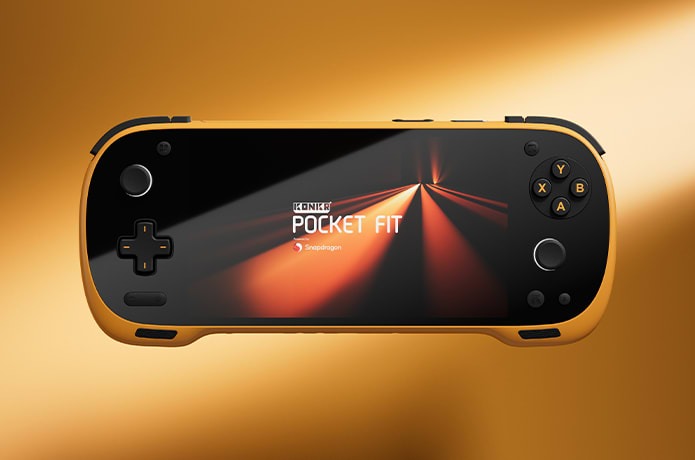
AYANEO just announced it will discontinue the Pocket Micro, one of its latest handhelds, and raise prices across its remaining lineup. Per Notebookcheck's reporting, the company cited LPDDR5 memory costs as the primary driver. Per GamesRadar, the discontinuation is explicitly framed around "RAMageddon" — the industry shorthand for a component squeeze that's been building since late 2025. This is the second wave of AYANEO price hikes in 2026. The first came earlier this year; Time Extension called it another chapter in what it described as "an awful year for retro handheld fans." The phrasing understates the structural problem. This is not a bad year. This is a market rewriting its cost basis in real time.
The mechanism is straightforward. AI training clusters and inference servers consume vast quantities of high-bandwidth memory. LPDDR5 — the same memory standard that goes into Snapdragon and Dimensity SoCs powering retro handhelds — is being bought in volume by hyperscalers. Samsung, SK Hynix, and Micron have publicly signaled that HBM (High Bandwidth Memory) for AI GPUs is their priority allocation. Downstream, every device that uses LPDDR5 in lower volumes pays a higher spot price. Phones absorb it because their margins can carry it. Boutique handhelds cannot.
The 4:3 aspect ratio isn't a design choice. It's the whole thesis. And it's also the thing that makes these devices hardest to source.
Here is where the story turns from macro supply chain into something specific to the retro-handheld scene. The devices most affected are not the generic Android gaming tablets with 16:9 panels — those share commodity display and memory configurations with the phone supply chain and get the benefit of scale. The devices getting squeezed hardest are the ones built around non-standard aspect ratios. AYANEO's Pocket S Mini, for example, ships a 3.7-inch 4:3 display. The company's product page frames this as a philosophical commitment: the 4:3 ratio is the native aspect ratio for Game Boy, Game Boy Advance, SNES, Genesis, PS1, and Saturn games. It is, by AYANEO's own framing, the reason the device exists. But a 3.7-inch 4:3 AMOLED panel is not a component that Samsung makes for the phone market. It's a low-volume custom order. When the broader memory and component market tightens, these custom components don't just get more expensive — they get harder to source at all.
This is the specific trap. The makers most committed to doing retro correctly — matching the aspect ratio, choosing the panel that actually displays the content without letterboxing — are the ones most exposed to a commodity squeeze they didn't cause and can't influence. A 16:9 Android slab can run RetroArch with pillarboxing and call itself a retro handheld. A device built around 4:3 cannot fake it. The authenticity is the bill of materials. And the bill of materials is what RAMageddon reprices.
Per Retro Handhelds Weekly's Edition 84, the broader retro-handheld market is feeling the same pressure from multiple directions — not just memory, but freight costs, tariff uncertainty, and panel supply. The weekly roundup notes that multiple manufacturers have flagged component availability as a concern heading into mid-2026. The AYANEO discontinuation is the most visible casualty so far, but it is not likely to be the last.
The bifurcation
As we noted in the RAM-pocalypse macro piece, the retro-handheld market was already bifurcating before RAMageddon hit. On one side: high-volume, Android-based devices from companies like Anbernic that use commodity components and compete on price. On the other: boutique devices from AYANEO, AYN, and Retroid that compete on display quality, aspect-ratio fidelity, and build materials. The commodity side survives a supply shock by shrinking margins. The boutique side survives by raising prices or killing SKUs. AYANEO is now doing both simultaneously.
The Pocket Micro discontinuation is the tell. Per GamesRadar, the device was announced and is being pulled before its production run reaches maturity. That is not a product reaching end-of-life. That is a product whose cost basis moved faster than its retail price could follow. When a manufacturer announces discontinuation and price increases in the same breath, the underlying message is: we cannot make this thing at the price you would pay for it, and we cannot make enough of it to justify holding the line.
Retroid and AYN face the same arithmetic. The Retroid Pocket series and AYN's Odin line both use Snapdragon and Dimensity chipsets with LPDDR5 memory. Both companies operate on thinner margins than a phone OEM. Both have less purchasing leverage with component suppliers. Neither company has announced discontinuations as of this writing, but the pressure is structural, not idiosyncratic to AYANEO. If the LPDDR5 spread persists through Q3 — and every indicator from the memory market suggests it will — every boutique handheld maker will face the same repricing decision.
Why this matters for preservation hardware
The retro-handheld market exists in a specific niche within the broader preservation ecosystem. These are not FPGA devices — they don't offer cycle-accurate reproduction. They're not software-emulation PCs disguised as handhelds — though some of them functionally are. What the best of them offer is a form factor that respects the original content: a 4:3 screen at a size that approximates a Game Boy or a PSP, running emulators that are mature enough to be transparent. The value proposition is not accuracy — it's portability with dignity. You can play Castlevania: Symphony of the Night on a 4:3 AMOLED without pillarboxing, without scaling artifacts, and in your pocket.
When RAMageddon kills the devices built around that proposition, what survives is the commodity tier: 16:9 Android slabs that run the same emulators with worse aspect-ratio fidelity. The emulation layer doesn't degrade. The experience does. Pillarboxing a 4:3 game on a 16:9 screen wastes a third of the display. Integer scaling helps but doesn't solve the fundamental mismatch. The boutique makers understood this, built devices around it, and are now being punished for it by a supply chain that does not care about the Game Boy Advance's native resolution.
There is an irony here that is worth naming. The AI boom — which is partly built on training data that includes the output of decades of game development — is now directly degrading the market for devices that let people play those games portably. The data centers consuming LPDDR5 at scale are running workloads that, in some cases, were trained on the visual and mechanical patterns of the very games these handhelds exist to preserve access to. The snake does not know it is eating its own tail, but the tail knows.
What happens next
Three scenarios, in descending order of likelihood. First: the boutique tier contracts. AYANEO, AYN, and Retroid all reduce their SKU count, raise prices on remaining models, and focus on the highest-margin configurations. The sub-$150 boutique handheld effectively disappears for the remainder of 2026. This is already happening.
Second: one or more boutique makers pivot to FPGA or ASIC-based designs that don't require LPDDR5. This is theoretically possible but practically difficult — the FPGA supply chain has its own constraints, and the tooling investment for a handheld-class FPGA device is enormous. Analogue builds at this tier. Nobody in the retro-handheld Android space has the capital or the expertise to follow them on a six-month timeline.
Third: the memory market corrects. Samsung and SK Hynix bring new HBM capacity online, LPDDR5 spot prices ease, and the boutique tier rebuilds. The timeline for this, per industry analysts, is late 2026 at the earliest and more likely mid-2027. That's a long time for a market that lives on Indiegogo campaigns and Discord preorder windows.
The most likely outcome is the first one. The retro-handheld scene in mid-2026 will have more devices, not fewer — but fewer good ones. The commodity tier will keep shipping. The boutique tier will shrink. And the devices that were built around the right display for the job — the 4:3 screens, the 3:2 panels, the vertical-orientation options for TATE shooters — will become harder to find and more expensive when you do.
RAMageddon is not killing retro handhelds. It is killing the specific retro handhelds that were trying to get the aspect ratio right. That distinction is the whole story.
The hardware-revival beat doesn't stop. Bookmark Rejected Coins for the next dispatch on what's surviving the squeeze — and what isn't.