
The $210 PSOne That Actually Works: SuperStation One Is What Sony's PS Classic Should Have Been
In 2018, Sony shipped the PlayStation Classic — a miniature PSOne running open-source emulation software so poorly configured that modders had it jailbroken in a weekend and reviewers had it in a bargain bin by January. It retailed for $99, dropped to $25 within months, and taught a single lesson: the brand name is not the product. Eight years later, Retro Remake's SuperStation One — a $210 FPGA console designed by Taki Udon — does what Sony never bothered to: run PSOne games at cycle-accurate fidelity, through real analog outputs, with a controller ecosystem that doesn't feel like a party favor. The reviews are in. Time Extension calls it the definitive way to play original PlayStation hardware. And the dock isn't even out yet.
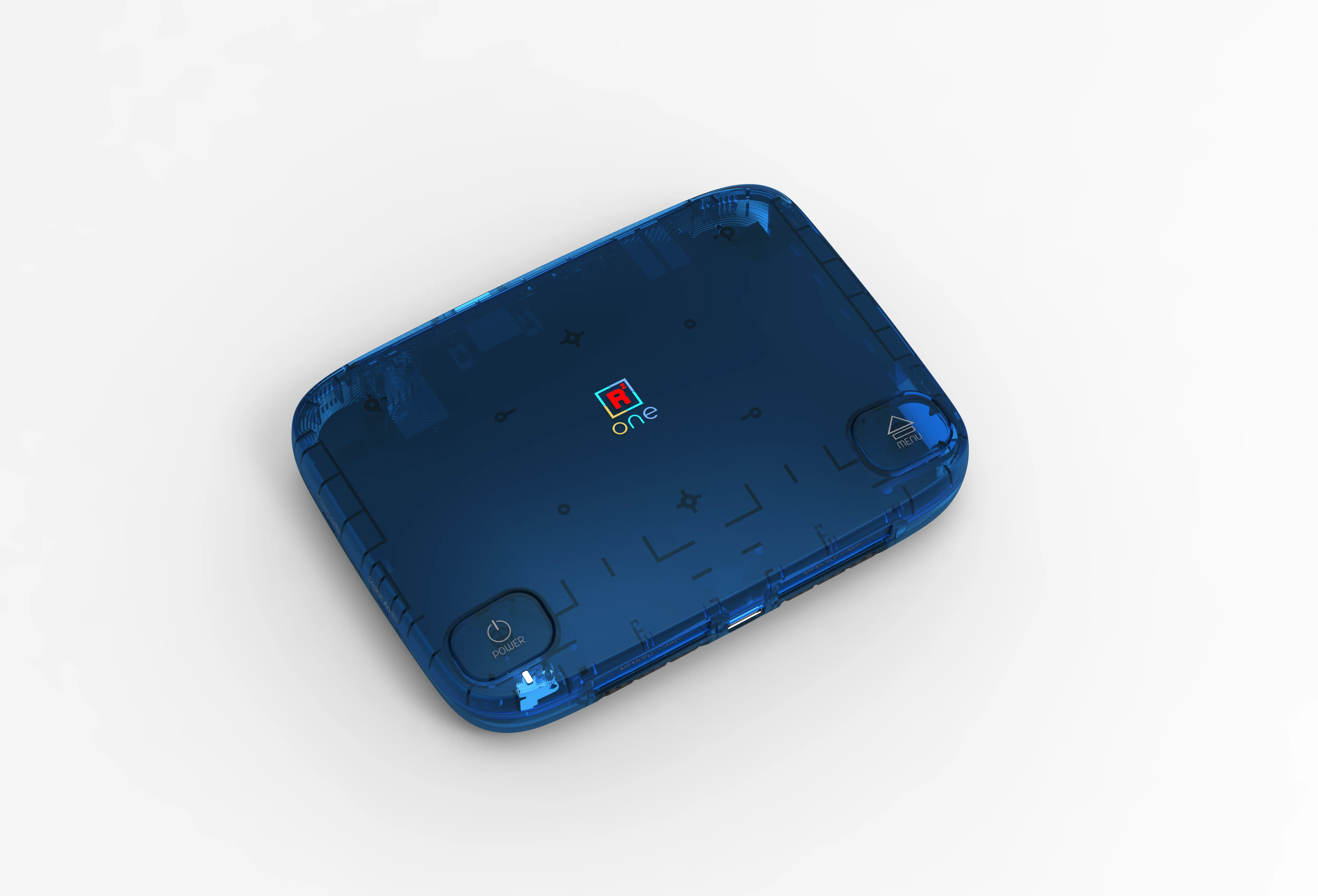
What the PS Classic got wrong
Sony's PlayStation Classic was a miniature PlayStation that could not play PlayStation games well. That is not a simplification. The 2018 mini-console shipped with PCSX ReARMed — a capable open-source emulator — configured with default settings that introduced visible frame-pacing errors, input lag measurable in double-digit milliseconds, and an HDMI-only output path that made CRT use impossible without external scalers. Twenty of its built-in titles ran the slower PAL versions. Tekken 3 stuttered. Ridge Racer Type 4 had audio sync issues. The thing cost a hundred dollars and felt like a proof of concept someone shipped by accident.
Within three months, the PS Classic was sitting on clearance shelves at $25. Modders added RetroArch, swapped the game list, and turned it into a passable emulation box — but that required community labor Sony could have done itself and chose not to. The message was clear: the PlayStation brand was sufficient. The hardware didn't need to be good. The brand was the product.
The brand was not the product.
What SuperStation One is
The SuperStation One is a standalone FPGA console that recreates the original PlayStation's hardware in programmable logic rather than software emulation. It runs at $210 — twice the PS Classic's launch price, eight times its clearance price — and it does the one thing the PS Classic couldn't: behave like a PlayStation.
FPGA, for the uninitiated: instead of software interpreting the original CPU's instructions one at a time, an FPGA chip reconfigures its physical logic gates to become the original hardware. The distinction matters for timing. A PSOne's R3000A CPU, its SPU sound processor, its GPU and its CD-ROM subsystem all operate on interlocked clock domains. Software emulation approximates those timing relationships. FPGA recreates them. The result — when the core is well-written — is behavior indistinguishable from the original silicon, including the bugs developers relied on.
The SuperStation One, as reviewed by Time Extension, delivers exactly this. Compatibility is high. Frame pacing is correct. Audio sync holds. And — the detail that separates this from a novelty item — it outputs analog video: composite, S-Video, and component, alongside HDMI. If you own a CRT, you can plug this in and get the image the developers actually authored. If you don't, the HDMI path is clean. Either way, you're looking at a real signal, not a filtered approximation.
"The PlayStation Classic asked: will people buy a box with our logo on it? SuperStation One asks: will people pay to play these games correctly? Different question. Different answer."
Taki Udon and the development in the open
The person behind SuperStation One is Taki Udon, a hardware developer who came up through the MiSTer FPGA community and has been working on a PSOne core for years. The development history, documented in a February 2026 interview with Read Only Memo, reads like a preservation project that grew a commercial shell around it — not the other way around.
Taki's background matters because it explains the product's priorities. The MiSTer scene cares about accuracy first, features second. Cores get validated against real hardware with oscilloscope captures and regression suites, not marketing focus groups. When Taki moved the PSOne core from MiSTer to a standalone product under the Retro Remake label, those priorities came with it. The SuperStation One has two controller ports, a memory card slot, analog outputs, and a disc-image loader. It does not have Bluetooth, Wi-Fi, an app store, or a mascot on the boot screen. The feature list is short because the feature list is honest.
This is worth naming because the FPGA hardware-revival space is getting crowded, and not every entrant shares the same design ethic. Some products lead with form factor; some lead with compatibility lists; some lead with the logo of the console they're recreating. SuperStation One leads with the signal path. Analog out on a $210 device is a statement about who this is for: people who own CRTs, people who care about the image as authored, people who have been doing this longer than the nostalgia cycle has been profitable.
The dock, and what it implies
In a follow-up interview with Read Only Memo, Taki discussed the SuperDock — an expansion peripheral that would add additional I/O and functionality to the base unit. Details are still sparse, but the trajectory is clear: the SuperStation One is being designed as a platform, not a one-shot product. The dock implies future cores, future capabilities, a roadmap that extends past the initial sale.
This is the MiSTer model, commercialized. The MiSTer DE10-Nano is a general-purpose FPGA board that runs dozens of console and arcade cores, all community-developed, all open-source. Its strength is breadth. Its weakness is accessibility — building a MiSTer requires sourcing a specific Terasic board, soldering or buying I/O add-ons, and navigating a setup process that assumes comfort with Linux. The SuperStation One trades breadth for depth: one console, done properly, in a box you plug in. The dock hints that the depth might expand.
Whether Retro Remake can sustain a platform is an open question. The FPGA hardware market is littered with ambitious products that shipped once and went silent. But the fact that Taki is building in the open — interviews on the record, development documented, community roots visible — is a structural advantage. When the person making the thing has a public history of making things, the roadmap has weight.
The comparison Sony invited
Sony did not have to ship the PlayStation Classic. No one demanded it. The market for mini-consoles was a Nintendo creation — the NES Classic and SNES Classic sold millions by being genuinely good products with tight emulation, curated game lists, and enough charm to justify the shelf space. Sony saw the market, built a cheaper product, and assumed the PlayStation brand would carry the gap.
It didn't. And now a one-person hardware developer has shipped a $210 box that does the job Sony abandoned. The SuperStation One is not a response to the PS Classic — Taki's core work predates it — but it is an answer to the same question. Can you put a PlayStation on a modern shelf and have it feel like a PlayStation? Sony said yes, then shipped something that felt like a USB stick in a plastic shell. Retro Remake said yes, then shipped something that behaves like the real hardware because it is the real hardware, rebuilt in programmable logic.
The price gap is real. $210 is not an impulse purchase. But the PS Classic at $99 wasn't a good purchase at all, and the SuperStation One at $210 is — by every technical measure available — a correct one. Correct frame timing. Correct audio sync. Correct analog output. Correct controller feel. Correctness, in hardware revival, is the product. Everything else is packaging.
"Correctness, in hardware revival, is the product. Everything else is packaging."
Where this sits
The SuperStation One enters a growing field. Analogue builds premium FPGA consoles at higher price points with pristine industrial design. The MiSTer ecosystem offers unmatched breadth at the cost of accessibility. Software emulators — DuckStation, Mednafen, the RetroArch ecosystem — offer free PSOne play on hardware people already own. Each approach has trade-offs, and none of them are wrong.
What SuperStation One does is fill a specific gap: a dedicated, plug-and-play, cycle-accurate PSOne with analog output at a price point below Analogue's range and above the hobbyist floor. It is not the cheapest way to play PSOne games. It is not the most versatile. It is the most faithful in its weight class, and faithfulness is a design choice that matters to a specific audience — an audience Sony once owned and then forfeited by shipping a product that treated them as an afterthought.
Taki Udon built the thing Sony should have built. That's not a burn. That's a fact about what happens when preservation-minded engineers have access to FPGA toolchains and a market that wants correct hardware more than it wants a logo. The SuperStation One costs $210. It works. That's the whole review.
If you've used the SuperStation One — or you're still running a PS Classic with RetroArch bolted on — we'd like to hear from you. What does correct PSOne playback mean on your setup? Reach us at the usual channels.