
No Emulation, No FPGA, No Compromise: What SNK and Plaion Are Actually Selling with the NEOGEO AES+
A first-party ASIC Neo Geo, cartridge-compatible with the original AES, $249.99, ships in November. Analogue has owned this category for a decade. SNK just walked through the front door at nearly 30% under Pocket-tier pricing. The question isn't whether the AES+ is good. It's what it does to MiSTer and Pocket, whose whole pitch was "you can't buy the silicon anymore."
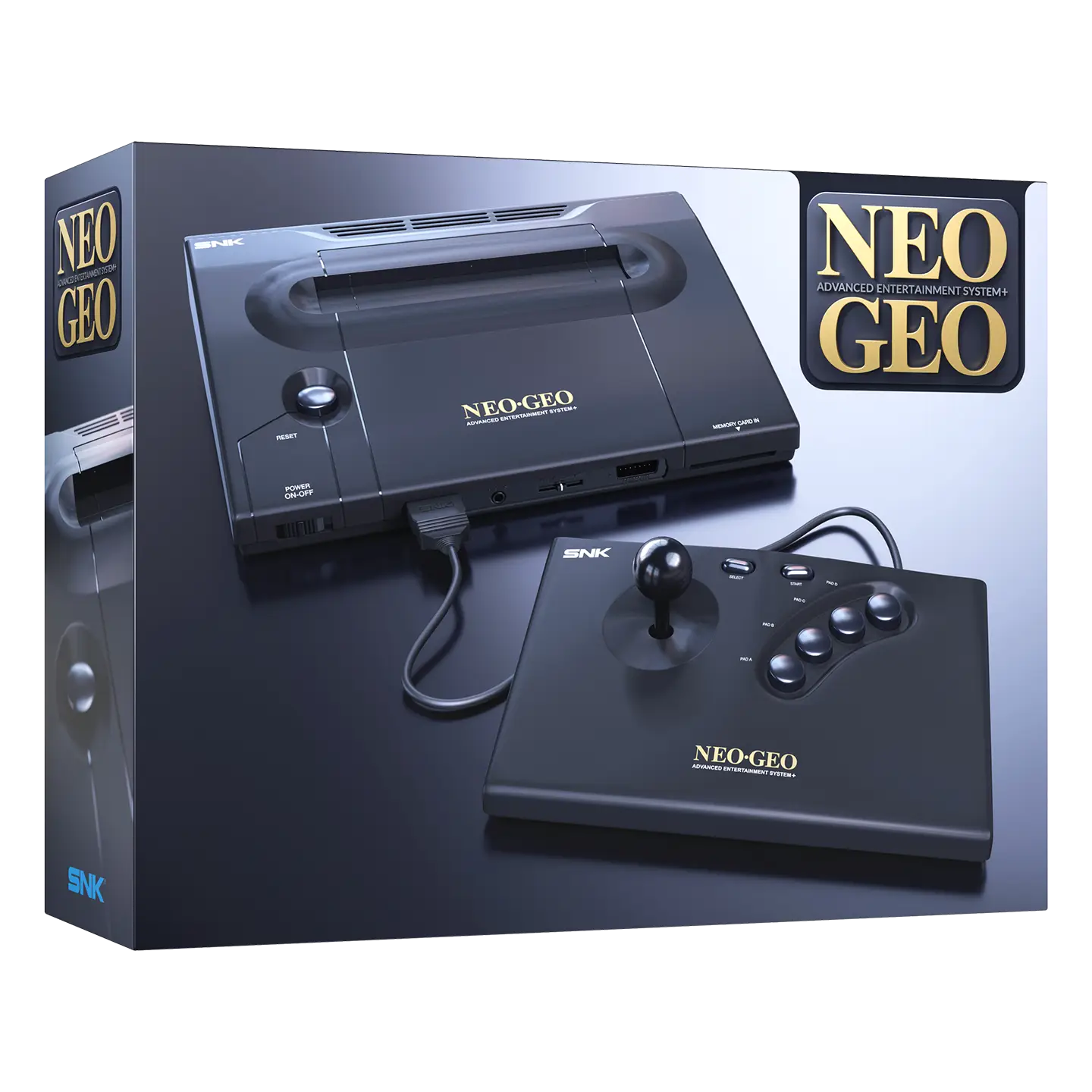
The marketing copy writes itself: "No emulation. No compromise. No comparison." It's on the SNK press release. It's on the Plaion Replai pre-order page. And — this is the part that should get your attention — it is literally true. The NEOGEO AES+ uses ASIC silicon. Application-specific integrated circuits, fabricated to replicate the original 1990 Neo Geo AES at the transistor level. No software cores, no FPGA reconfiguration, no interpretation layer. It plays original AES cartridges because it is an AES, rebuilt in modern silicon, with HDMI coming out the back instead of composite.
The price is the story. $249.99 standard, $349 for the 35th-anniversary edition, $1,000 for the Ultimate. Holiday 2026, November 12. Pre-orders live now at plaionreplai.us. Ten classic AES cartridges at launch, more promised. BIOS + DIP switches on the underside for territory language, overclocking, display mode. Save states persist high scores. 1080p output, low-latency. The anniversary edition has different materials and a 35-year callback to the original launch year.
Now do the Analogue comparison. Analogue has spent ten years building the ASIC-revival category essentially alone. The Nt Mini Noir, the Super Nt, the Mega Sg, the Duo, the Pocket. Each device is a miracle of fanatic engineering and none of them are cheap — the Pocket lands around $249 depending on run, the higher-end consoles north of $349. Analogue's pitch has always been "we will build the faithful replica silicon nobody else will build, because the original chips are out of production." That pitch was correct for ten years.
It's now half-correct. SNK did the thing Analogue couldn't do: got the official IP holder to sanction, co-develop, and distribute first-party ASIC replacement silicon for one of the canonical 16-bit platforms. It's cheaper than any comparable Analogue product. It runs first-party original media. And it does it with the rights holder's blessing, which Analogue — clone-silicon on non-licensed ROMs — has always had to work around.
If the AES+ is the first domino, the question becomes what Capcom does, what Konami does, what Sega does. The next twenty-four months of this category are going to be much more interesting than the last ten.— Lumenforce
Here's where the argument gets sharper, though. The NEOGEO AES+ does exactly one platform. Analogue's value proposition — especially Pocket — is everything: Game Boy, Game Boy Color, GBA, Game Gear, Lynx, Neo Geo Pocket, plus the openFPGA ecosystem that delivers dozens more cores for free. And MiSTer does everything harder — every OCS/ECS/AGA Amiga, every major 16-bit, every arcade core, a growing library that pokes into the 32-bit era. FPGA's pitch was never just silicon-scarcity; it was one device, configurable into anything. The AES+ can't touch that and isn't trying to.
What the AES+ does touch is the argument that faithful hardware replicas are a small-run boutique market. $249.99 at launch — presumably via normal retail channels, the way Plaion distributes their other gaming hardware — is category-redefining pricing. If it sells well, and if the licensing template works, other first-party deals become plausible. If SEGA signed a Plaion-equivalent deal for a Genesis AES+ at $199, Analogue's Mega Sg sits in a difficult conversation. If Capcom signed one for CPS-1, the FPGA community's months of work on arcade cores becomes less necessary.
None of that has happened yet. One deal, one console, one press release. But the door is open now in a way it wasn't on April 15. The FPGA scene didn't lose anything this week — MiSTer and Pocket are still doing what they do, still better-configurable, still cheaper-per-platform over a library. What changed is that "first-party sanctioned ASIC" is a category that now exists and is economically viable. Everybody who plays in this space just got a new neighbor, and that neighbor owns the IP.
We'll review the AES+ the moment a retail unit lands. If the launch holds to spec, the review's probably a Rejected Coins +4 on principle — first-party cart compatibility with HDMI-era convenience is the actual use case ninety percent of Neo Geo owners have always wanted. The interesting question isn't whether to buy it. The interesting question is whether you still need the FPGA for your Neo Geo life once this ships. Early call: yes, if you want the rest of the FPGA's library; maybe not, if you only wanted the Neo Geo.