
Hardcore Achievements On FPGA Hardware: How RetroAchievements Just Made the Cycle-Accurate Dream Playable
RetroAchievements now supports hardcore achievements on MiSTer FPGA hardware, starting with NES games. Developer odelot is working on expanding core support while the RetroAchievements team actively pursues hardcore verification for FPGA targets. This solves a friction point that has divided the scene for years: FPGA purists dismissed RetroAchievements as a software-emulation feature; the infrastructure to make achievements native to cycle-accurate hardware has now arrived. The moment matters because both communities are colliding upstream. FPGA adoption is accelerating. Achievement-tracking is now infrastructure, not a peripheral. And the tool-makers who built the bridge — odelot, Wes Copeland, the RetroAchievements verification team — have made something playable that the scene said was impossible.
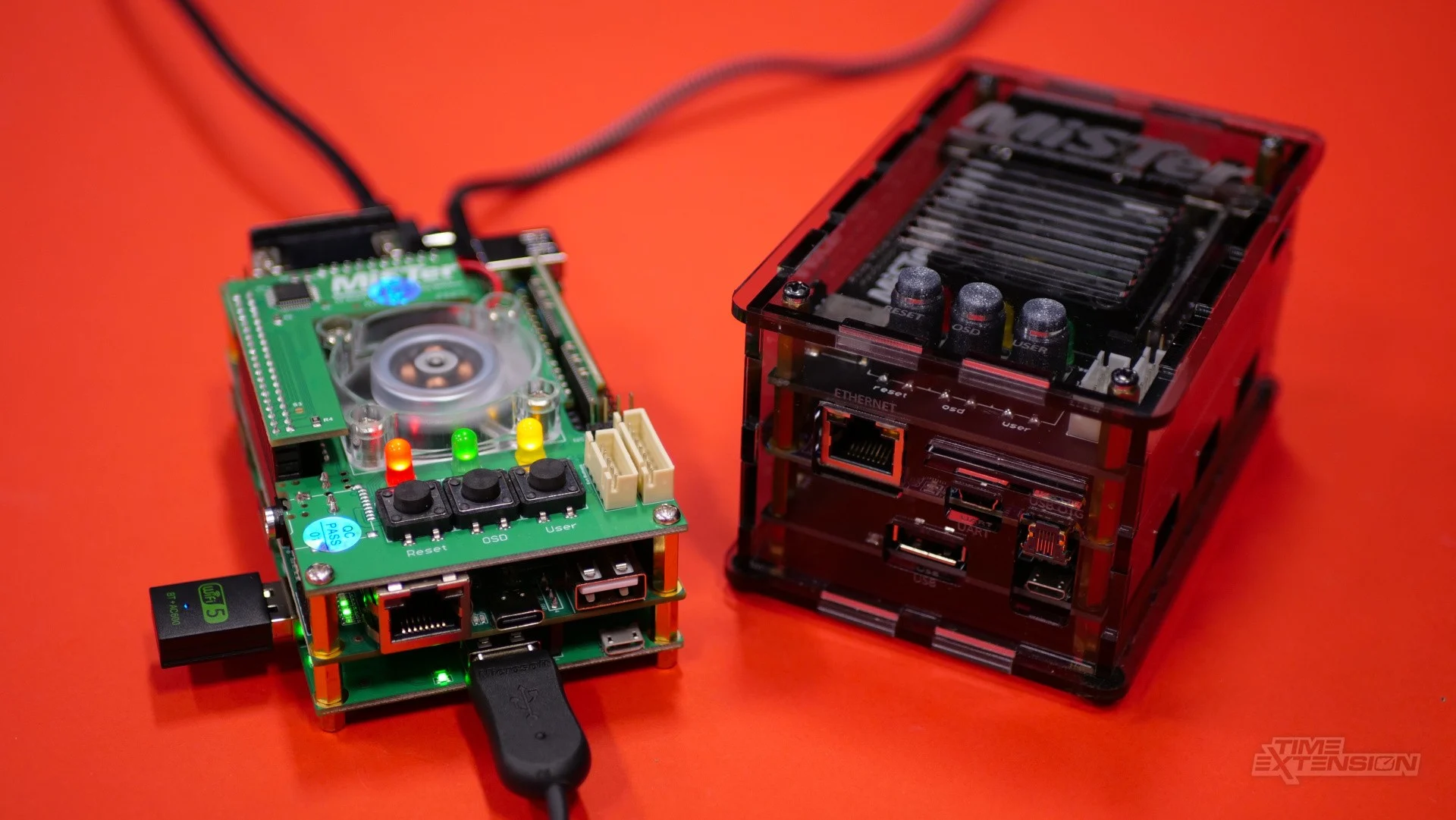
The scene has spent years arguing about what "accurate" means. Software emulation is close enough for most; FPGA is cycle-perfect for the purists. But there was a third argument running underneath: achievements themselves, the progress-tracking and verification infrastructure that RetroAchievements built, were a software-only feature. You got them on RetroArch, on Dolphin, on Cemu. You did not get them on MiSTer — the FPGA implementation that runs the full hardware stack of a NES or Genesis in silicon, one gate at a time.
That divide is now closed. As of late April 2026, hardcore achievements on MiSTer are live for NES games. The work began with odelot, an FPGA developer working across multiple cores. Alongside the RetroAchievements verification team, odelot built the hooks for hardcore mode — the strictest achievement tier, which demands no save-states, no rewinds, no cheats — to work on FPGA hardware. The NES core is the proof of concept. Other cores are in progress.
What this means, practically: a player running Donkey Kong on a MiSTer device can now unlock achievements in real time, with the same verification rigor that Dolphin players have known for years. The achievement data feeds back into the RetroAchievements leaderboards. The hardware that the purists swore was "too perfect to need achievement tracking" now has it.
This is not obvious infrastructure. The friction between FPGA and achievements was real. FPGA hardware operates at a different computational register than software emulation — it is running a bit-for-bit description of the original silicon, not an interpreted approximation of it. The timing model is different. The save-state mechanism is different. The way a game reads its own hardware clock is different. Wes Copeland, the RetroAchievements lead, and his team had to solve for all of that. They built verification on top of FPGA state. They had to make sure that cheats — the same kinds of cheats that are trivial to inject into software emulation — remain detectable and blockable on hardware that has no operating system, no hooks, no place to inject code.
The solution was discipline. odelot and the RetroAchievements team wrote verification routines that run on the MiSTer stack itself, checking the hardware state at the moment of achievement unlock. No middleman. No software layer reinterpreting the bits. This is achievement verification running on the emulated hardware, not above it.
"The hardware that the purists swore was too perfect to need achievement tracking now has it."
Why does this matter? Because it dissolves a real tribal argument. The FPGA community and the achievement-tracking community have grown in parallel but separate. FPGA players wanted authenticity without the side quest of grinding for digital badges. Achievement players wanted their progress tracked, even if it meant accepting software emulation's approximations. RetroAchievements existed in the software gap. Now it exists in the hardware gap too.
The timing of this ship is not accidental. Both communities are growing at once. Analogue released the Pocket with OpenFPGA support in 2024. MiSTer boards are now manufactured by multiple shops — MiSTer Addons and others. The entry price is lower. FPGA hardware is no longer a boutique scene hobby; it is competing for shelf space against RetroArch and Yuzu and every other emulation platform. In that crowded space, achievement support is table stakes. RetroAchievements recognized it. odelot built it. The barrier dissolved.
What remains is the hard work of expansion. NES is the first core. Genesis is promised. Game Boy, SNES, Neo Geo — each one requires verification work on top of the core itself. odelot is working on them. But the infrastructure is now there. The pattern is proven. Once a core has been hardened for hardcore mode, it works. The leaderboards integrate automatically.
This is how you bridge a divide in the scene. You don't debate philosophy. You build something that makes both sides obsolete. FPGA is not "better" than RetroAchievements now; they are the same thing. A player on a MiSTer is not choosing between authenticity and progress tracking. They are getting both. That is worth naming the people who built it — odelot, Wes Copeland, the RetroAchievements team — and moving on to the next problem.
Next steps: Watch the MiSTer forums and RetroAchievements announcements for core expansion. Genesis support is the next milestone. If the verification model holds, every subsequent core becomes a straightforward implementation problem, not an architectural one.