
Flyinghead Brought Bomberman Online Back From the Dead — 23 Years Later, Eight Players Can Blow Each Other Up Again on Real Dreamcast Hardware
Bomberman Online went dark in 2003 when Sega shut down SegaNet. The servers stopped answering. The disc became a coaster with a good single-player mode and eight-player infrastructure that pointed at nothing. Twenty-three years later, scene developer Flyinghead has reverse-engineered the original netcode, rebuilt the server backend, and brought eight-player online Bomberman back to life — on real Dreamcast hardware, over modern broadband adapters. Hudson Soft's last great party game on Sega's last console is playable again the way it was designed to be played.
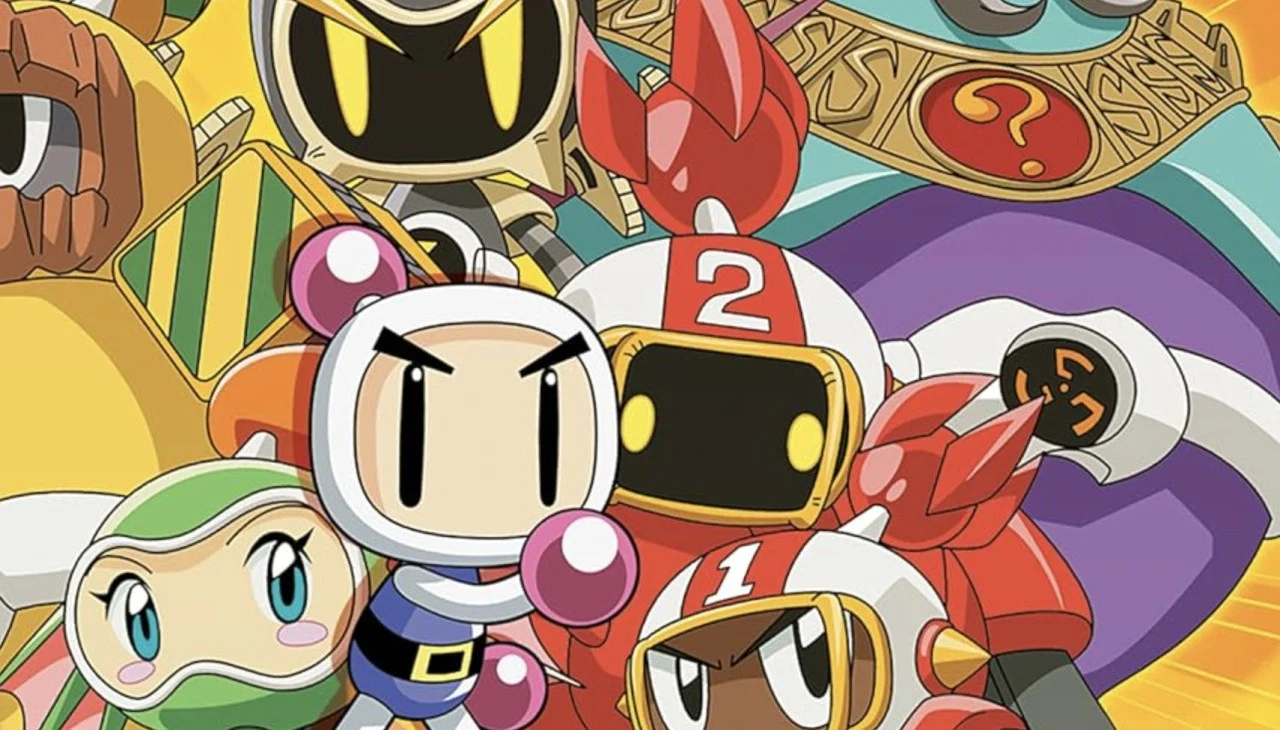
Bomberman Online is back. Not a remaster, not a spiritual successor, not a "like" or an "inspired by." The original 2001 Dreamcast game — Hudson Soft's eight-player online arena battler that shipped into SegaNet's brief and turbulent window — is connectable again. Scene developer Flyinghead reverse-engineered the dead server protocol, rebuilt the matchmaking and game-state backend, and opened it to anyone with a Dreamcast, a broadband adapter (or DreamPi dial-up bridge), and a copy of the disc.
The timing matters because it arrives alongside a broader wave of Dreamcast online revivals that are collectively rewriting the console's legacy narrative. Time Extension reported this week that Rune Jade — a Japan-exclusive Dreamcast MMO from Sega that never left Japanese servers, let alone Japanese shores — has also been brought back online through similar community-driven server reconstruction. Phantasy Star Online's private server scene has been the headline story for Dreamcast online preservation for years. Now there's a pattern. Flyinghead's Bomberman work proves it's not a one-game anomaly. The Dreamcast's online infrastructure, which Sega abandoned wholesale when they exited the hardware business in 2001, is being systematically resurrected by individuals who care more about the platform's unfinished promise than the company that made it ever did.
The work itself
What Flyinghead did here is not a simple server emulation. Bomberman Online's netcode was designed for SegaNet — Sega's proprietary dial-up service that launched in 2000 and folded by 2002 in North America. The game expected a specific handshake sequence, a specific authentication flow, and a specific lobby architecture. When SegaNet went down, those expectations pointed at nothing. The disc's online menu became a dead end. Every copy of Bomberman Online in every Dreamcast in every living room on the planet simply stopped being the game it was designed to be.
Flyinghead's reconstruction required tracing the original network calls — packet captures from 2001-era sessions that survived in community archives — and rebuilding a server that speaks the same dialect. The matchmaking lobby, the player-count negotiation for up to eight simultaneous players, the in-game state synchronization: all of it had to be reverse-engineered from the client side, because Sega's server code was never published and almost certainly no longer exists in any accessible form.
The result works on original hardware. You slot the GD-ROM, connect through a Dreamcast broadband adapter (the HIT-0401 or its third-party clones) or through a DreamPi dial-up emulation setup, point at the community server, and you're in a lobby. Eight players. Bombs. Power-ups. The grid. It is Bomberman Online the way Hudson Soft shipped it, running against infrastructure that Hudson Soft and Sega never imagined would need to exist.
"The disc's online menu became a dead end. Every copy of Bomberman Online in every Dreamcast in every living room on the planet simply stopped being the game it was designed to be."
Who to credit and where to find it
Flyinghead is the developer to name here. This is the same person behind ongoing Dreamcast emulation and preservation work in the scene — they've contributed to the Flycast emulator project and have a track record of diving into the Dreamcast's network stack specifically. The Bomberman Online server revival is part of a larger body of work focused on restoring the Dreamcast's online functionality across multiple titles.
The community coordination around this revival lives in the Dreamcast online preservation community — the same networks that maintain Phantasy Star Online private servers and the DreamPi project. Time Extension's coverage from Kerry Brunskill's report is the cleanest public-facing documentation of the revival's current state. If you have the hardware and want to connect, the Dreamcast online community's Discord and forum channels are the entry point — they maintain server status pages and setup guides for broadband adapter configuration.
Where this sits
Bomberman Online was the end of a particular line. Hudson Soft — the studio that created Bomberman in 1983, refined it across the PC Engine, Super Famicom, Saturn, and N64 eras, and turned its multiplayer mode into one of gaming's most reliable social contracts — shipped this as their Dreamcast entry in 2001. It was the first Bomberman built from the ground up for online play. Not split-screen with a network option bolted on. Online-first. Eight players over SegaNet, with the grid expanded and the power-up economy tuned for the latency characteristics of early-2000s dial-up connections.
Hudson Soft no longer exists. Konami absorbed them in 2012. The Bomberman franchise continues under Konami — Super Bomberman R and its successors — but nobody at Konami is going to rebuild a SegaNet server stack to restore a 2001 Dreamcast game's online mode. That's not a criticism. It's a statement of economic reality. The market for "eight-player Bomberman on original Dreamcast hardware over reconstructed SegaNet infrastructure" is too small for any corporation to service and exactly the right size for a scene developer with the skills and the motivation to do it anyway.
This is what preservation looks like when it's not about ROMs and disc images. The binary is already preserved — every Bomberman Online GD-ROM that still reads is a complete copy of the game's client code. What was lost was the other half of the architecture. The server. The thing the game talks to. Without it, you have a functional single-player Bomberman and a broken online mode that taunts you every time you navigate to the network menu. Flyinghead rebuilt the half that was never on the disc, and in doing so restored the game to its full design intent for the first time in twenty-three years.
The Dreamcast is twenty-seven years old. Its online infrastructure was the most forward-thinking feature in any console of its generation and the one that aged the worst, because it depended entirely on servers that a company in financial freefall had no reason to maintain. Every game that goes back online — Phantasy Star Online, ChuChu Rocket, Rune Jade, now Bomberman Online — is a small correction to that history. Flyinghead just made the correction that matters most to anyone who ever sat in a room with seven other people and argued about who placed the bomb that started the chain reaction.
Know someone preserving another dead-server Dreamcast title? Send it to the desk.