
Five Years of Community Archaeology, Then Nine Days of Playing Twilight Princess at 4K/120. Meet Dusklight.
Dusklight is a native PC port of The Legend of Zelda: Twilight Princess built entirely from the zeldaret community's five-year decompilation of the GameCube binary. It ships 4K rendering, 120 fps support, ultrawide, and modern control remapping — none of which existed in the 2006 original. The team behind it, TwilitRealm, did not write an emulator. They compiled the recovered C code into a new executable. And the pipeline they used to get there has a name: it is Ship of Harkinian's schematic, applied to a different ROM.
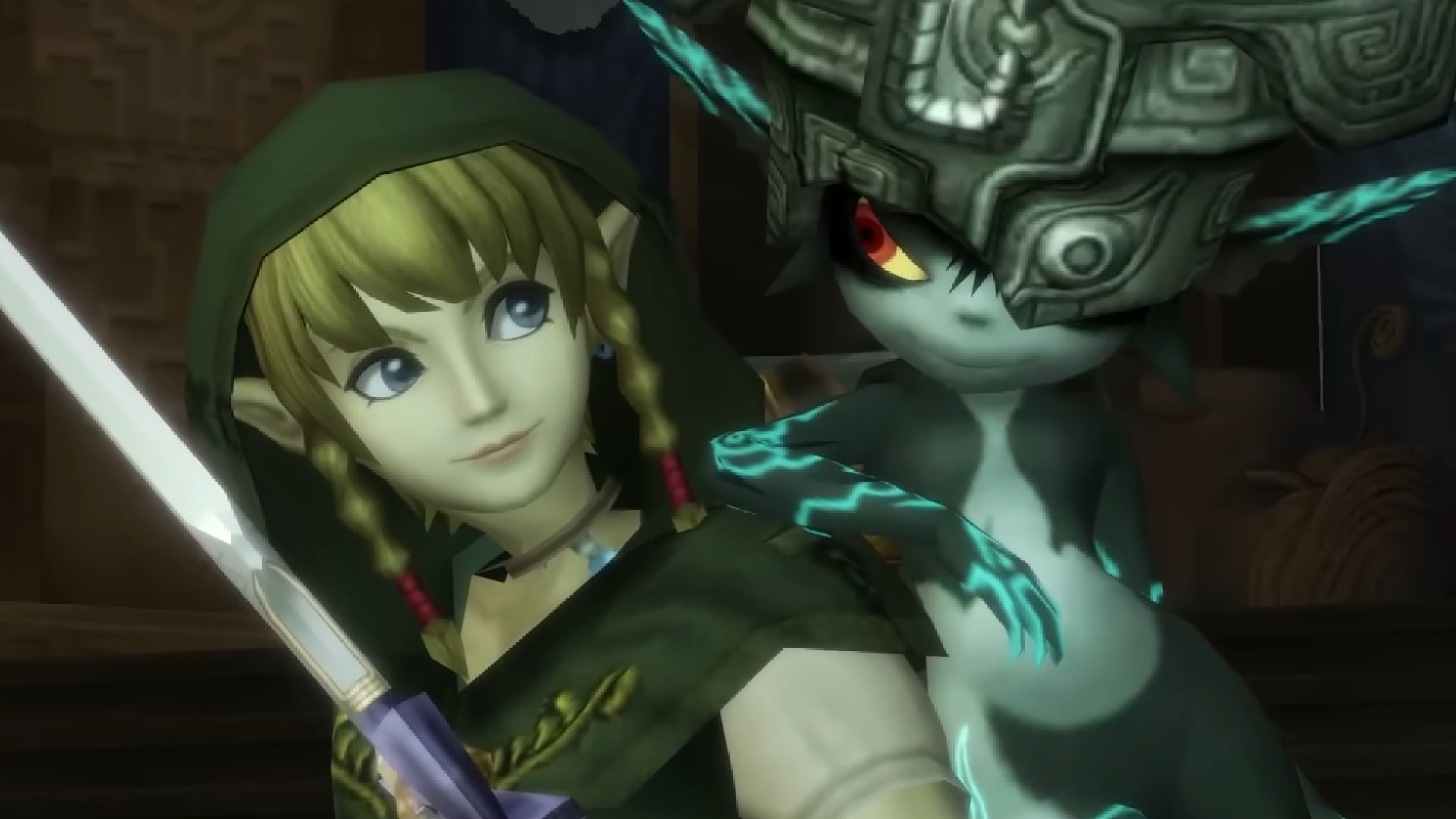
Dusklight — also referred to by its shorthand "Dusk" — is a native PC port of The Legend of Zelda: Twilight Princess (GameCube, 2006). It launched on May 9, 2026. Within nine days it had become one of the highest-profile decompilation-derived ports in the scene's history, covered by RetroRGB, Time Extension, and tracked across ReadOnlyMemo's master decomp list. The mechanism it uses to exist — community decompilation of a retail binary into compilable C, then recompilation targeting modern platforms — is not novel. It is borrowed, precisely and intentionally, from Ship of Harkinian.
The mechanism worth mapping is the full pipeline: reverse-engineer a Nintendo retail binary into matching C source → build a new executable from that source for modern hardware → add modern rendering and input features that were architecturally impossible on the original console. This pipeline has a specific originator. Ship of Harkinian, the community-built native port of Ocarina of Time, demonstrated it first. Dusklight applies it to Twilight Princess with the same structural logic, down to the requirement that users supply their own ROM to generate the asset data. The schematic is Ship of Harkinian's. The application is TwilitRealm's. The debt runs deep, and it is worth tracing precisely because almost nobody covering the release has traced it.
The schematic: what Ship of Harkinian proved
Ship of Harkinian (SoH) was not the first decompilation project in the Nintendo scene — the zeldaret collective's Ocarina of Time decomp predates it, and the Super Mario 64 decomp predates that. But SoH was the first project to take a completed Zelda decompilation and ship it as a playable, user-facing native port with a modern rendering backend, widescreen support, high-framerate output, and a GUI launcher. The pipeline has four load-bearing stages:
Stage 1: Community decompilation. Dozens of contributors reverse-engineer the compiled PowerPC (or MIPS, for N64 titles) assembly back into C functions that, when compiled, produce a byte-identical binary to the retail ROM. This is the archaeological work — years of it, function by function, struct by struct. For Ocarina of Time, the zeldaret/oot project reached matching status. For Twilight Princess, zeldaret/tp has reached approximately 50% decompilation as of the Dusklight release.
Stage 2: Asset extraction. The user supplies their own legally obtained ROM. The build system extracts textures, models, audio, and scripting data from it. No copyrighted assets ship with the port binary. This is the legal firewall that makes the project distributable.
Stage 3: Platform-abstraction layer. The recovered C code targets the original console's hardware — Flipper GPU calls for GameCube, Reality Coprocessor calls for N64. The port replaces these with modern graphics API calls (OpenGL, Vulkan, Direct3D) and wraps input, audio, and windowing in cross-platform abstractions. This is where the engineering talent of the port team — as distinct from the decomp team — lives.
Stage 4: Enhancement layer. With native code running on modern hardware, features that were architecturally impossible on the original console become straightforward: arbitrary resolution rendering, uncapped or high-target framerates, ultrawide aspect ratios, modern controller support with remappable inputs, and quality-of-life patches.
Ship of Harkinian demonstrated that this four-stage pipeline produces something categorically different from emulation. An emulator interprets the original binary instruction-by-instruction on foreign hardware. A decomp-derived native port compiles recovered source code for the target hardware. The distinction matters: native ports don't carry the overhead of instruction translation, don't require accuracy tradeoffs, and can be enhanced at the source level rather than through external hacks.
Side-by-side: the mechanism mapping
The structural parallels between Ship of Harkinian and Dusklight are not incidental. They are the same pipeline with a different ROM fed in at stage 1.
In Ship of Harkinian, the user supplies an Ocarina of Time ROM. The build system extracts assets, compiles the zeldaret/oot C source against a modern rendering backend, and produces a native executable. In Dusklight, the user supplies a Twilight Princess GameCube ROM. The build system extracts assets, compiles the zeldaret/tp C source against a modern rendering backend, and produces a native executable. The verbs are identical. The nouns changed.
Per the Dusklight project page, the port targets the GameCube version specifically — not the Wii release, which mirrored the world and added motion controls. This is a deliberate choice that mirrors SoH's targeting of the N64 Ocarina of Time rather than the 3DS remake. In both cases, the decomp exists for the older binary, and the port inherits that constraint.
Where the mapping gets interesting is in what Dusklight does with the enhancement layer that SoH either couldn't or didn't:
Resolution and framerate. Per the Dusklight install guide, the port supports 4K rendering and framerates up to 120 fps. Ship of Harkinian offered similar resolution scaling but shipped into a scene where high-refresh displays were less common. The capability is architecturally identical — once you have native code, resolution is a render-target parameter — but the user-facing result is more dramatic for a 2006 GameCube title than it was for a 1998 N64 title. Twilight Princess has higher-polygon models, larger draw distances, and more complex lighting than Ocarina. The headroom matters more.
Widescreen and ultrawide. Both ports offer widescreen. Dusklight extends this to ultrawide aspect ratios. The underlying mechanism is the same: the recovered C source contains the original viewport and projection matrix calculations, which can be patched at the source level to support arbitrary aspect ratios without the stretching artifacts that emulator-side widescreen hacks produce.
Input remapping. Both ports abstract input away from the original controller. Dusklight supports modern gamepads and keyboard-mouse input with full remapping. The schematic is SoH's — the abstraction layer design, the configuration UI pattern, the approach to analog-stick deadzone handling all follow the same structural logic.
What the borrowing adds
The honest answer: repeatability. Ship of Harkinian proved that a community decompilation could become a native port. Dusklight proves it can happen again, with a different game, by a different team, using the same pipeline. That is the real contribution. Per ReadOnlyMemo's decomp tracker, there are active decompilation projects for dozens of Nintendo titles. Each one that reaches matching status is now a potential Dusklight — a native port waiting for a build team to apply the SoH schematic.
TwilitRealm also earns credit for shipping against an incomplete decomp. Per the project's own documentation, the zeldaret/tp decompilation is roughly half complete. The remaining functions are handled through a hybrid approach — decompiled C where available, with the original compiled object code linked in where functions haven't been recovered yet. This is a pragmatic engineering decision that SoH did not need to make (zeldaret/oot was further along at SoH's launch). Shipping a playable, stable port at 50% decomp is a genuine technical achievement that extends the schematic's range.
What it doesn't quite earn
The incomplete decomp is also the limitation. Functions that haven't been decompiled can't be enhanced at the source level. Per RetroRGB's coverage, the project is expected to improve as the underlying zeldaret/tp decomp progresses — but that means Dusklight in May 2026 is a snapshot, not a finished product. The enhancement layer can only reach as deep as the decompilation does. Lighting, particle systems, AI routines that haven't been recovered yet remain black boxes — the port runs them, but can't modify them.
There is also the question of what happens when the schematic encounters a more complex original. Twilight Princess is a substantially larger game than Ocarina of Time — more assets, more scripted sequences, more environmental variation, a longer critical path. Per Time Extension's recap, early adopters have reported stability that's remarkable for a first release, but the surface area for edge-case bugs is proportionally larger. SoH had years of community patching to reach its current stability. Dusklight is nine days old.
And the lineage question that nobody wants to ask: does the SoH schematic scale to games that aren't Zelda? The zeldaret decomps share engine DNA — Ocarina and Twilight Princess are built on related codebases, which means the platform-abstraction patterns transfer cleanly. A Metroid Prime decomp-to-native-port would face a fundamentally different rendering pipeline. The schematic may not generalize as cleanly as its two successful applications suggest.
What it loses
The thing that decomp-derived native ports structurally cannot preserve is the console's hardware behavior at the analog level. Emulation — particularly cycle-accurate emulation — reproduces timing quirks, bus contention, audio DAC characteristics, and rendering artifacts that are part of the original experience. A native port compiled for a modern GPU does not produce the Flipper's dithering patterns, does not reproduce the GameCube's audio resampling behavior, does not exhibit the original's frame-pacing characteristics. For a game like Twilight Princess, where the art direction was designed around 480i/480p output on specific display hardware, the native port is playing a version of the game that its artists never saw. This is not a criticism — it is a tradeoff the pipeline makes by design. But it is a loss, and it is the same loss Ship of Harkinian makes with Ocarina. The schematic inherits the tradeoff.
Lumenforce's position: FPGA when authenticity is the question, native ports when accessibility is the question. Dusklight makes Twilight Princess accessible to anyone with a PC and a legally obtained ROM. It does not make it authentic. Both are worth having. The distinction matters.
Dusklight runs on Ship of Harkinian's schematic — the same four-stage pipeline, the same legal architecture, the same enhancement philosophy — applied to a harder problem, shipped against an incomplete decomp, and already proving that the model is not a one-off but a repeatable pattern for community-driven game preservation.
Dusklight is nine days old and already the second proof that the decomp-to-native-port pipeline works. Which decompilation project do you want to see apply the schematic next?