
Atari Just Filed a Trademark for the 800XL. If That Means What Fans Hope, It's the Most Interesting Hardware Move Since the 2600+.
A USPTO trademark filing for "800XL" appeared on May 22, 2026, covering computer hardware, peripherals, and gaming equipment. Atari under Wade Rosen has been methodically re-activating dormant product names — the 2600+, the 400 Mini, the 7800+. The 800XL is the most capable 8-bit computer Atari ever shipped. If this filing becomes a product, it's the first Atari revival that has to answer a harder question than nostalgia: what does a modern 800XL actually do?
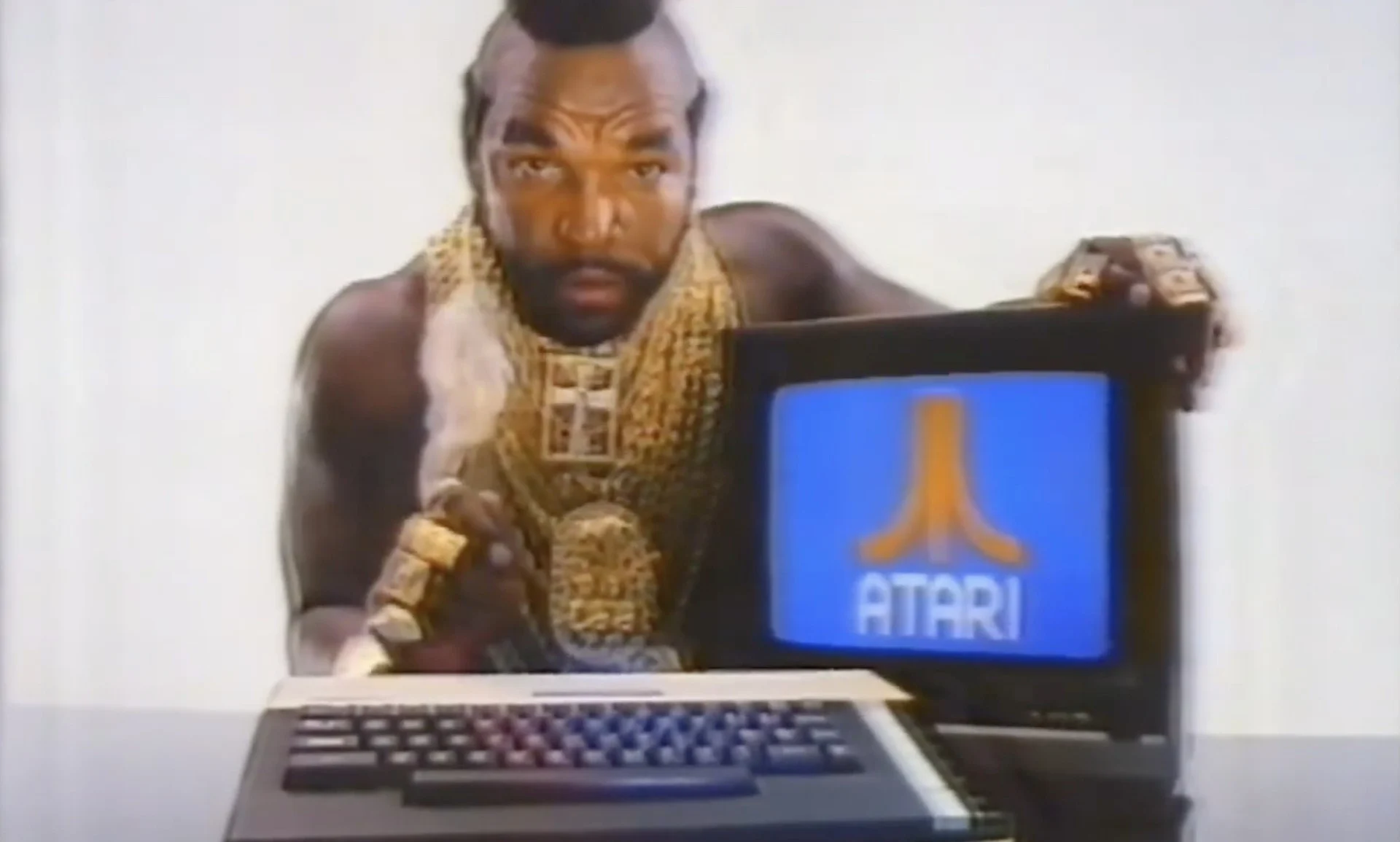
Atari filed a trademark for "800XL" with the United States Patent and Trademark Office on May 22, 2026, and if you know what the 800XL was, that sentence does more lifting than any press release the company has issued this year. Per the filing itself, the application covers International Class 9 — computer hardware, computer peripherals, video game consoles, controllers, and joysticks. That's not a defensive filing. That's a product description waiting for a product.
The trail is well-worn. Time Extension flagged the filing immediately, noting the pattern: Atari trademarked "2600+" before the 2600+ shipped. Trademarked "7800+" before the 7800+ shipped. Filed for the 400 Mini before its THEC64-derived miniature hit retail. Per Generation Amiga's reporting, the 800XL filing follows the same goods-and-services language as those earlier filings. The playbook is visible from orbit.
But the 800XL is not the 2600. It is not the 7800. And this is where the filing gets interesting.
The machine that was too good for Atari's own management
The original Atari 800XL, released in 1983, was the crown of Atari's 8-bit computer line — a 64KB machine with the same ANTIC/GTIA/POKEY custom chip architecture that made the Atari 400 and 800 distinctive, but in a cost-reduced, mass-production-friendly form factor. It was a real computer. It ran BASIC out of the box. It had a cartridge slot and an SIO port for disk drives and peripherals. It played games that rivaled the Commodore 64 and often beat the Apple II. It was, by any reasonable measure, the strongest 8-bit Atari ever shipped — and then Jack Tramiel bought the company and killed the line.
That history matters because every previous Atari revival under Wade Rosen has been a console. The 2600+ is a cartridge-compatible FPGA console. The 7800+ is a cartridge-compatible FPGA console. The 400 Mini is a miniaturized emulation box — a console in a keyboard-shaped shell. All of them answer the same question: can you play old Atari games on new Atari hardware? The answer has consistently been yes, at varying levels of quality, and the market has responded with polite enthusiasm.
The 800XL can't just answer that question. The 800XL was a computer. If Atari makes a new one, the question becomes: is it a computer?
The fork in the road
There are exactly two things this filing could mean, and they are very different products.
Path one: another THEC64-style mini. Atari licenses or builds a small emulation box in a shrunken 800XL case, preloads it with games, ships a USB joystick, and calls it a day. This is the 400 Mini playbook. It would sell. It would be fine. It would not be interesting. Per GamesRadar's coverage, this is the default assumption — another retro mini, another shelf ornament.
Path two: a functional 8-bit computer. Atari builds or licenses an FPGA-based or emulation-based machine that boots to BASIC, accepts cartridges or disk images, supports the SIO ecosystem (or a modern equivalent), and behaves like an 800XL with modern display output. This is the path that would make the filing genuinely remarkable — and the path that, frankly, the 800XL name demands.
The 800XL was a computer. If you put the name on a box that can't run BASIC, you're selling a costume, not a revival.
The tension is real. The 2600+ and 7800+ succeeded in part because consoles are simple objects — cartridge in, game out. A computer revival is harder. The 800XL's user base didn't just play games; they typed BASIC listings from magazines, they ran productivity software, they explored a filesystem. Shrinking that to a plug-and-play box strips the thing that made the machine matter. But building a full-featured modern 8-bit computer is an engineering challenge that Atari's current hardware partners — primarily Plaion and its THEC64/VCS infrastructure — haven't publicly demonstrated they can pull off at the FPGA level.
What Rosen's Atari has actually earned
This is the same company that bought Wizardry and the same company that now owns three emulation engines. Under Rosen, Atari has been remarkably consistent about one thing: it buys names, and then it ships products under those names. The execution has varied — the Atari VCS was an expensive mess, the 2600+ was a pleasant surprise, the 7800+ landed somewhere between. But the pattern is undeniable. Atari's current business model is IP archaeology, and the 800XL is one of the richest sites left to dig.
The trademark filing's goods-and-services description covers both "computer hardware" and "video game consoles," which is either hedging or honesty — the 800XL was always both. A filing is not an announcement. There is no confirmed product, no ship date, no partner named. Atari has not commented publicly. Everything beyond the filing itself is inference, and inference presented as fact is a pet peeve around here.
What's not inference: the name "800XL" is now legally in play for the first time in decades. Atari paid the filing fee. The classification covers hardware. The company has shipped every previous product that followed this exact sequence.
Why this one matters more than the others
The 2600+ proved Atari could ship a cartridge-compatible revival that worked. The 7800+ proved the company could iterate. The 400 Mini proved it could license a mini-console competently. None of those products had to answer a design question harder than "what goes in the box."
The 800XL has to answer: who is this for? If the answer is "people who want a small Atari-shaped thing on their shelf," the product will exist and be forgotten. If the answer is "people who want to type 10 PRINT "HELLO" and hit Return on real hardware in 2027," then Atari is making the most interesting piece of retro-computing hardware any major brand has attempted since the THEA500 Mini — and possibly since the original C64 Maxi.
The 8-bit computer revival space is not empty. Retro Games Ltd. shipped the C64 Maxi with a working keyboard and BASIC. The MEGA65 exists as a community-driven FPGA successor to the Commodore 65. The ZX Spectrum Next proved there's a market for full-featured FPGA reimplementations of classic 8-bit platforms. Every one of those products treated the computer as a computer. Every one of them found an audience — small, dedicated, and willing to pay for authenticity.
Atari has the name. Atari has the IP. Atari has a hardware pipeline and retail distribution. What Atari has not yet demonstrated is the willingness to ship a product that demands more of its user than plugging in an HDMI cable and pressing power.
The trademark filing says "800XL." The 800XL was a machine that booted to READY and waited for you to type something. If the product lives up to the name, it will be the first Atari revival that asks something of the person holding the controller — or, more precisely, sitting at the keyboard. That's the bet. That's the interesting part. And a trademark filing is exactly where every previous Atari revival started.
If you're building on 8-bit Atari hardware, preserving software for it, or you just want to tell us your 800XL origin story — we're listening. Rejected Coins covers preservation, revival, and the people doing the work.