
Anbernic RG Rotate: The Swiveling Android Handheld Nobody Asked For (May 11 Launch, $87.99)
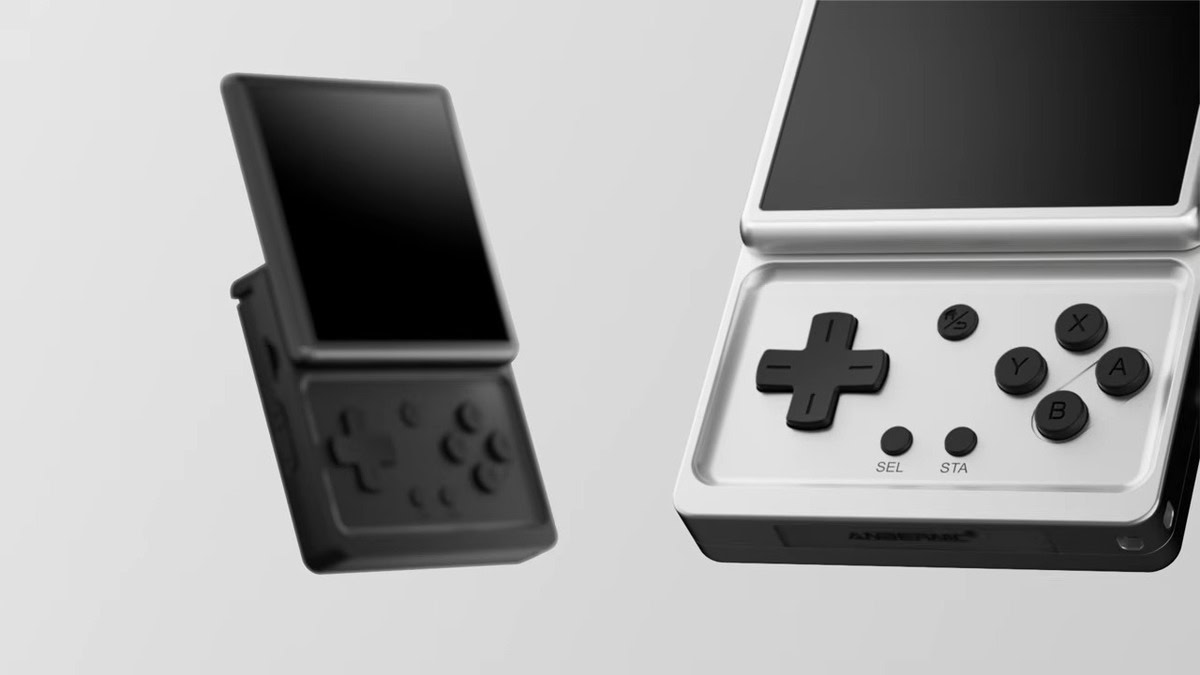
On May 11 at 6:00 AM ET, Anbernic will release the RG Rotate — a handheld with a swiveling hinge, a 3.5-inch 720×720 display, a Unisoc Tiger T618 chip, 3 GB of RAM, and a 2,000 mAh battery. The Polar Black model runs $87.99; Aurora Silver, with a full metal body, costs $107.99. It is not a spec-sheet leader. It is a form-factor experiment from a company that needs one, and it arrives with the unmistakable energy of a manufacturer trying to be weird on purpose.
The Context: Anbernic Needs a Conversation-Starter
Anbernic has had a strange spring. The RG Vita series and the G01 controller landed to mixed sentiment — not hostility, just the quiet kind of shrug that's worse than a pan. The community gave polite nods and moved on. Meanwhile, smaller outfits like GameMT have been getting attention by shipping oddball form factors that generate conversation first and sales second. Anbernic noticed. The RG Rotate is its answer: stop competing on specs, start competing on shelf weirdness.
That's not a criticism. It might be the smartest thing Anbernic has done in six months.
What's in the Box
The spec sheet tells a specific story. The Unisoc Tiger T618 is an octa-core chip paired with a Mali G52 GPU — an older chip by Anbernic's own standards, already established in their lineup. Three gigabytes of RAM. Thirty-two gigs of storage. A 2,000 mAh battery rated at three-plus hours. Android 12 as the operating system, with emulator support spanning Game Boy Advance through PS2 and beyond.
None of those numbers are trying to impress you. The T618 is a known quantity: competent for 2D systems and lighter 3D emulation, strained by anything past early PS2. If you've used an Anbernic device in the last two years, you've already benchmarked this silicon in your head. This is not a power play.
What is trying to impress you: the 3.5-inch display running at 720×720. That's the same resolution as the RG Cube, crammed into a smaller panel. The math is straightforward — higher pixel density means a noticeably sharper image. For pixel-art systems where every scanline matters, that density is doing real work. And the square aspect ratio means portrait-orientation games — vertical shooters, pinball tables, the entire TATE library — render without black bars or awkward cropping.
Two SKUs. The $87.99 Polar Black model features an aluminum alloy front panel with a plastic backshell. The $107.99 Aurora Silver variant gets a full metal body. Both ship with a tempered glass screen protector, application kit, charging cable, lanyard, extra L2/R2 buttons, and screen wipes. The extra shoulder buttons are a tell — Anbernic expects wear on the rotating mechanism, which means the hinge is load-bearing in the user experience, which means it better be good.
The Hinge Is the Whole Argument
Every swivel device lives or dies on the thing that swivels. The screen, the chip, the battery — all of it is subordinate to one question: does the hinge feel like a feature or a failure point?
We haven't held the RG Rotate yet. Nobody outside Anbernic has. So this is the disclosure: what follows is an assessment of the proposition, not the execution. The proposition is that a rotating screen creates two devices in one — a landscape handheld for standard games, and a portrait handheld for TATE shooters, classic arcade layouts, and anything designed for a vertical CRT. If the hinge is tight, confident, and durable, that proposition has real value. If the hinge is wobbly, grindy, or develops play within sixty days, the RG Rotate becomes the device you show people once and then put in a drawer.
This is the exact bet that clamshell phones made for years. Some won it. Most didn't. Mechanical complexity in a sub-$100 device is a trust exercise, and Anbernic's track record on build quality is good-not-great. The aluminum front on the Polar Black model suggests they know the hinge region needs structural support. The full-metal Aurora Silver suggests they know some buyers want to pay for peace of mind.
Who This Is Actually For
Not the spec-chaser. Not the person who wants PS2 at full speed on a handheld. That person should buy a device with a Dimensity chip and twice the RAM and stop reading this article.
The RG Rotate is for the person who already owns a competent horizontal handheld and wants a dedicated TATE device without buying a separate vertical-mounted screen setup. It's for the person who plays DoDonPachi and Ikaruga and Strikers 1945 and has been rotating their Miyoo or their RG353 sideways and holding it like a taco. It's for the collector who wants the conversation piece on the shelf, the device that makes someone pick it up and ask "what is this?"
That audience is small. Anbernic is betting it's loud.
The Android 12 Question
Running Android 12 in mid-2026 is a choice. It's a stable, well-supported base for RetroArch and standalone emulators, and the T618 has mature driver support on that version. Newer Android builds wouldn't gain the RG Rotate anything meaningful — this isn't a device that's going to run Genshin Impact. But the age of the OS does mean security patches are on borrowed time, and the Google Play ecosystem gets progressively more restrictive about older API levels. For a device that lives offline running local emulators, this mostly doesn't matter. For anyone planning to use it as a light general-purpose Android device, it matters a lot.
The emulator compatibility window is the thing that counts here. GBA through PS2 is the claimed range. In practice, on a T618 with 3 GB of RAM, expect clean performance through PSP and N64, acceptable-with-tweaking for Dreamcast, and case-by-case for PS2. The chip can push lighter PS2 titles. It cannot push God of War. If you already know what the T618 can do, the RG Rotate doesn't change the math — it just changes the shape of the device doing it.
The Battery Math
Two thousand milliamp hours. Rated at three-plus hours. For context: the Miyoo Mini Plus ships a 3,500 mAh cell and gets four to six hours depending on load. The RG Rotate's smaller battery in a device with a larger, higher-resolution screen is the clearest concession to the form factor. The hinge mechanism and the square panel eat into the internal volume that would otherwise go to the cell. Three hours is enough for a commute. It is not enough for a cross-country flight. Carry the cable.
Preliminary Score
This is a score on announced specs, build materials, and form-factor proposition. It will be revised if and when we get hands-on time with a production unit. The hinge is the variable that could move this score by ±15 points in either direction.
REJECTED COINS: +4
The RG Rotate is a modest positive. The square display at this pixel density is genuinely interesting for the TATE use case. The T618 is a known, adequate chip. The price is right — $87.99 for the base model is within impulse-buy range for the handheld community. The hinge is the entire risk profile. If it holds up, this is a clever niche device that earns its shelf space. If it doesn't, it's a novelty that breaks. We're scoring the bet, not the outcome, and the bet is an interesting one.
What earns it the positive territory: Anbernic didn't try to make this device everything. They picked a gimmick, committed to it, and priced it where the gimmick doesn't have to justify a premium. That's disciplined product design, even if the gimmick turns out to have a shelf life.
What keeps it from higher: three hours of battery, an aging OS, and the inescapable fact that the T618 puts a hard ceiling on the emulation range. The Aurora Silver's $20 premium for a full metal body is reasonable, but also suggests Anbernic knows the base model's plastic backshell might feel cheap against the aluminum front. And we still haven't seen teardown photos of the hinge mechanism.
The RG Rotate isn't trying to be the best handheld you can buy. It's trying to be the most interesting one on your shelf for under ninety dollars. Those are different goals, and Anbernic knows the difference.
The Bigger Picture
Anbernic shipping the RG Rotate tells you something about where the handheld emulation market is right now. The spec race has stalled. Everybody has access to the same Unisoc and MediaTek chips. Everybody can source the same IPS panels. The differentiator is no longer "my chip is faster" — it's "my device does something yours doesn't." GameMT understood this first. Anbernic is learning it now. The next twelve months of handheld releases are going to be defined by form-factor experiments, not benchmark wars, and the RG Rotate is one of the opening salvos.
Whether the swivel earns its keep or joins the pile of gimmicks that looked great in product photos — that depends on a hinge we haven't touched yet. May 11. We'll see.
Scores are ours. Consensus is context. Specs via Android Authority. Pricing and details via Steam Deck HQ.