
A Sega Rally Nintendo DS Prototype Just Surfaced After 20 Years. Prototopia Published It. That Sentence Contains the Entire Argument for Why Preservation Groups Matter More Than Publishers When It Comes to History.
A playable prototype of a never-released Sega Rally game for the Nintendo DS has surfaced after roughly two decades in obscurity. Prototopia — a preservation group affiliated with the Obscure Gamers community — published the ROMs to Internet Archive on May 20, 2026. The build is attributed to DC Studios, a pitch-demo house that shopped the concept to Sega and never received a green light. The prototype is now freely downloadable. No publisher preserved it. A volunteer group did.
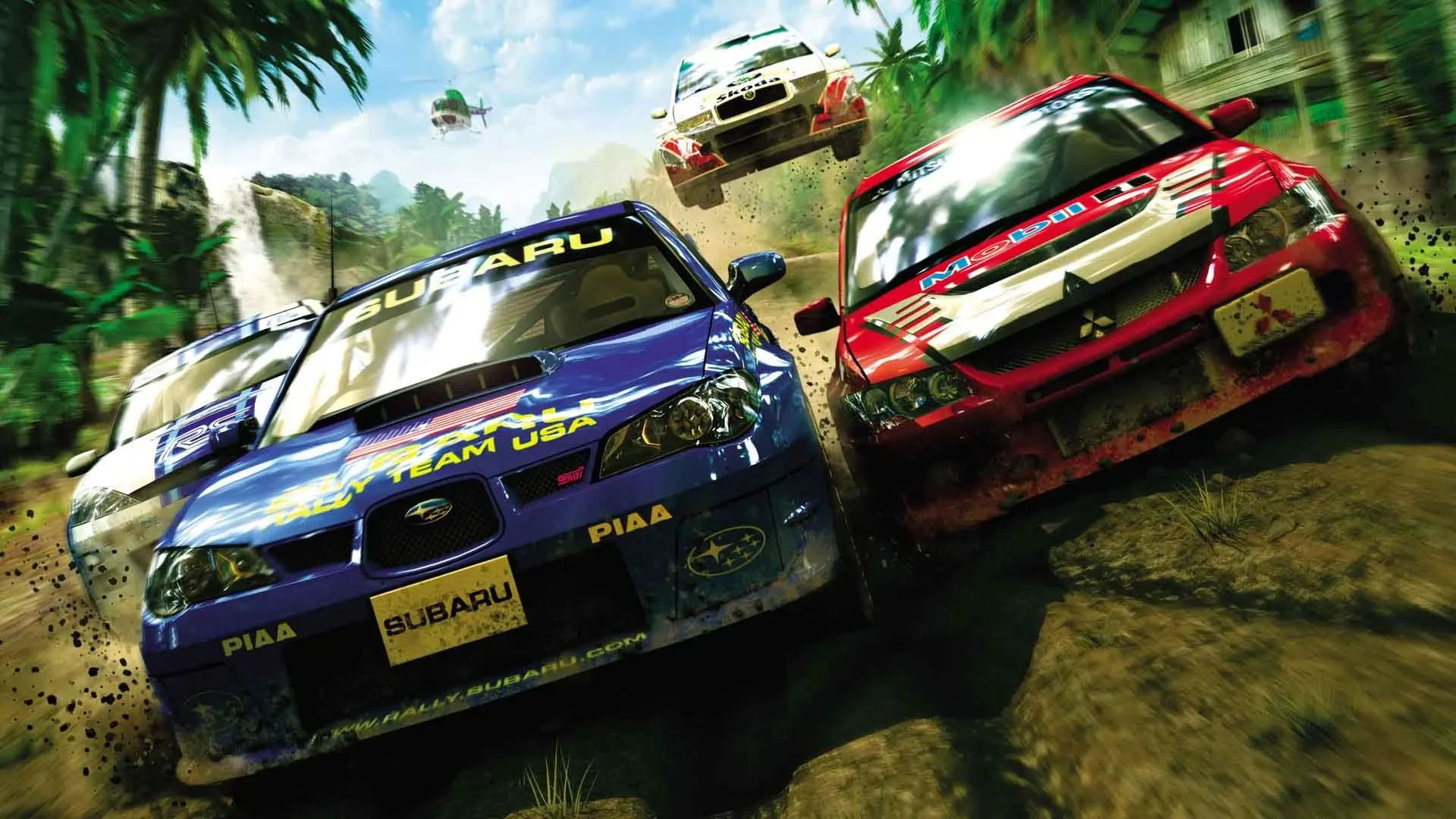
On May 20, 2026, a prototype ROM labeled DC Street Racing Demo appeared on Internet Archive. Per Time Extension's reporting, the build is a Nintendo DS pitch demo for a Sega Rally title that never reached production. The developer was DC Studios, a small outfit that built demonstration software to shop to publishers. Sega passed. The demo went into a drawer. It stayed there for roughly twenty years.
Prototopia — a preservation initiative connected to the Obscure Gamers community — obtained the build and published it. Per the Sega Rally Wikipedia entry, which now notes the discovery as of May 20, 2026, no prior documentation of a DS entry in the franchise existed in public records. The game was not canceled in any visible sense — it never advanced far enough to be announced, listed, or leaked. It was a pitch that failed to land, and the artifact that proved it existed sat in private hands until a volunteer group surfaced it.
What the Prototype Contains
Per RetroShell's coverage, the build is a functional racing demo. DC Studios' pitch work was designed to demonstrate that Sega Rally's core loop — arcade rally racing with terrain-type variation — could translate to the DS hardware. The ROM is playable. It runs on DS emulators and flash carts. The Internet Archive listing catalogs it under the generic title DC Studios used internally, not under the Sega Rally brand — a detail that likely contributed to its two decades of invisibility. If you were searching for "Sega Rally DS," you would not have found a listing called DC Street Racing Demo.
This is a common pattern with pitch demos. Studios that build proof-of-concept software for publishers rarely title the work under the licensed IP. They use internal project names, placeholder labels, codenames. The pitch fails, the studio moves on, and the artifact enters a liminal category: too niche for the publisher to archive, too commercially insignificant for anyone to hunt, and too unlabeled for search engines to connect to the franchise it represents. Pitch demos are the most endangered class of game artifact precisely because they are invisible by design.
Why Prototopia Matters
The Sega Rally franchise has had a complicated relationship with its own history. The original Sega Rally Championship (1994) is one of the most influential arcade racers ever made. Sega Rally 2 (1998) shipped on Dreamcast. Sega Rally Revo (2007) shipped on PS3 and Xbox 360. Sega Rally Online Arcade (2011) was a downloadable title that has since been delisted. Sega has not reissued or preserved these titles in any comprehensive way. The DS pitch demo — which Sega never even greenlit — is now the most accessible piece of Sega Rally history available on the open internet, thanks entirely to Prototopia.
"The DS pitch demo is now the most accessible piece of Sega Rally history available on the open internet. Sega didn't do that. A volunteer group did."
Prototopia and the broader Obscure Gamers community specialize in exactly this tier of recovery: prototype builds, pitch demos, debug ROMs, regional variants, and unreleased software that never reached a shelf. Their work is unglamorous and meticulous. It involves tracking down former developers, buying lots at estate sales, dumping cartridges and dev kits that have been sitting in garages. The Sega Rally DS prototype is a single ROM. It represents hundreds of hours of community labor to identify, obtain, verify, and publish.
The preservation argument here is not abstract. It is concrete and it is visible in the Archive listing. A game that Sega does not acknowledge existed is now downloadable, documented, and cataloged. If Prototopia had not acted, the build would have remained in private hands indefinitely — or been lost to a hard-drive failure, a move, a death. Every prototype that surfaces is a prototype that almost didn't.
The Pitch-Demo Problem
Pitch demos occupy a uniquely precarious position in game history. They are not prototypes in the traditional sense — they were not built to test a design hypothesis for internal use. They were built to sell a concept to a publisher. Their audience was a conference room, not a consumer. When the pitch fails, the demo has no constituency. The developer has no incentive to preserve it; it's a reminder of a deal that didn't close. The publisher has no reason to preserve it; they rejected it. The platform holder has no knowledge it exists.
Per Time Extension, DC Studios' portfolio included multiple pitch demos for various publishers. The Sega Rally build is one artifact from what was likely a broader body of work, most of which may still be unrecovered. The studio's name — DC Studios — is itself generic enough to resist easy search. Pitch-demo houses are, by nature, ephemeral. They exist to serve other companies' IP. When they close, their archives scatter.
This makes the work that groups like Prototopia and Obscure Gamers do structurally different from what publishers do. Publishers preserve what they shipped. Preservation groups preserve what was made — a much larger and more fragile category. The gap between those two scopes is where game history actually lives and where it is most likely to die.
What to Watch
The Internet Archive listing is live. The ROM is available for download. DS emulation is mature; the DS flash-cart ecosystem is alive and getting healthier. Anyone with a DS emulator or compatible flash cart can run the build now.
The immediate question is whether Prototopia has additional DC Studios material in its pipeline. Pitch-demo houses rarely built a single demo. If this build surfaced, others from the same source may follow. The broader question — as always with prototype preservation — is whether the next twenty-year-old build will find a Prototopia before it finds a landfill.
Sega has made no public comment on the discovery. Given the company's recent signals about its retro catalog, this would be a good moment to say something. A pitch demo for one of Sega's most celebrated racing franchises just proved that the company's history is wider than the company's memory. The people who filled that gap are volunteers. They deserve to be named: Prototopia. Obscure Gamers. The archivists who put it on Internet Archive.
The sentence is the argument: a preservation group published it, and a publisher did not. That has been the story for twenty years. It will be the story for the next twenty unless the institutions with the resources start doing the work the volunteers have been doing for free.
Sources cited in this dispatch are linked inline. The Internet Archive listing, Time Extension's reporting, RetroShell's coverage, and the Sega Rally Wikipedia entry are the primary references. All URLs accessed May 24, 2026.