
A PS2 Emulator Just Unlocked a SoulCalibur II Mode Nobody Had Played Outside a Real Arcade Cabinet
PCSX2x6 — a PS2 emulator fork built by Matías Israelson — just made SoulCalibur II's arcade mode playable on consumer hardware for the first time. The Namco System 246 ran on PS2 silicon, but the arcade build's attract mode, operator menus, and coin-op logic were locked behind hardware handshakes no retail disc ever triggered. Now a fork of the world's most mature PS2 emulator has cracked the gate. This is what preservation looks like when nobody's watching.
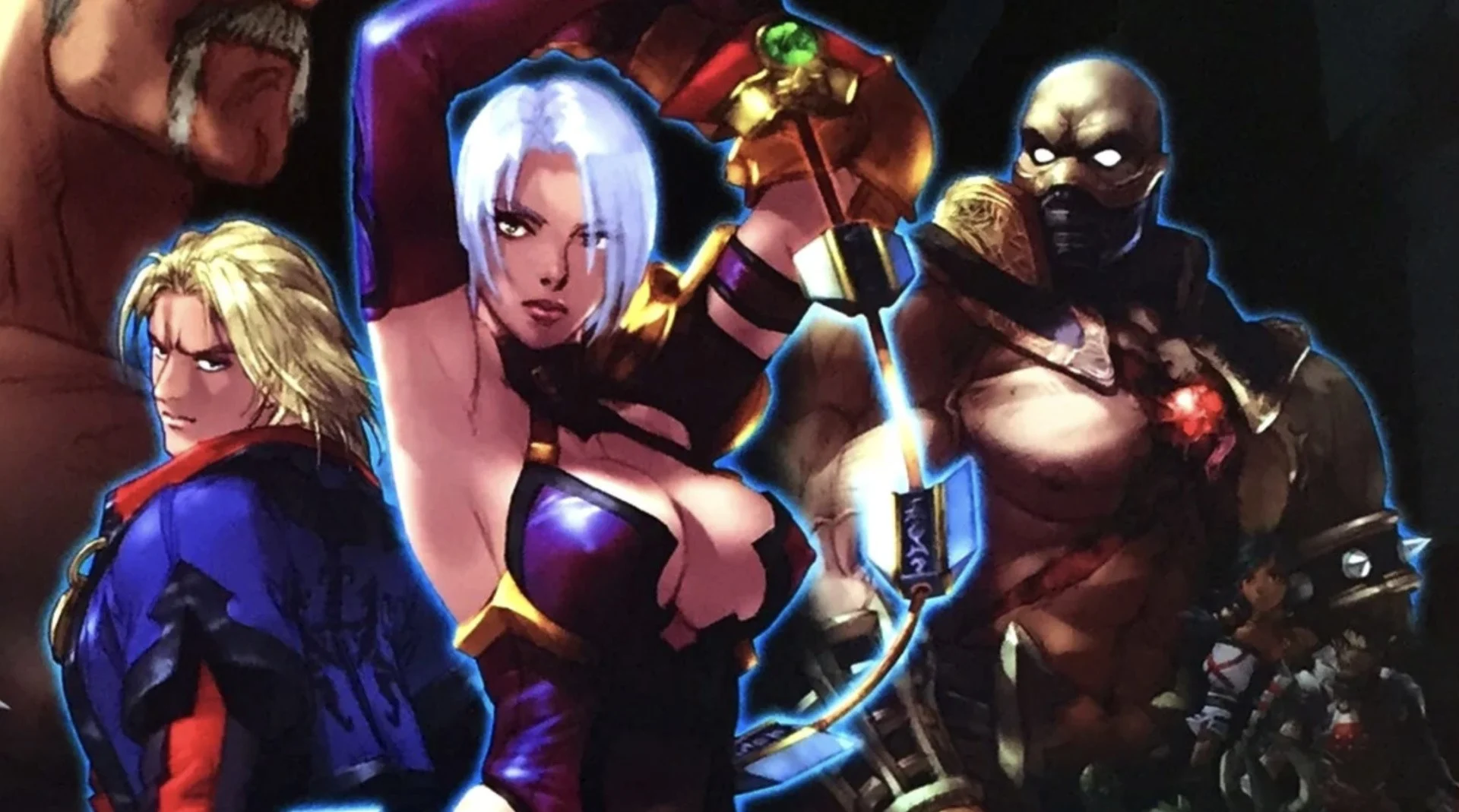
The Namco System 246 was never a mystery. Everyone in the fighting-game community knew it ran on PlayStation 2 hardware — the same Emotion Engine, the same Graphics Synthesizer, the same memory layout. Namco built it that way on purpose: arcade development on commodity silicon, with a security layer and I/O board on top to keep the coin-op builds from running anywhere else. SoulCalibur II launched on System 246 cabinets in 2002, then shipped to PS2, GameCube, and Xbox in 2003. The home versions became canonical. The arcade version — the one with operator menus, attract-mode loops, and coin-credit logic — stayed behind glass. Per Time Extension's May 2026 coverage, that's no longer the case. A PS2 emulator fork called PCSX2x6, built by Argentine developer Matías Israelson, now emulates the System 246 handshake well enough to boot the arcade build.
That sentence lands harder than it looks. The home port of SoulCalibur II is one of the most widely played fighting games of the sixth generation. Millions of people own a copy. But the arcade version — the version Namco tuned for quarter-munching, with different timing on the attract loop, operator-adjustable difficulty curves, and the specific coin-credit economy that shaped how players approached the game in 2002 — existed only on hardware that was never sold to consumers. Owning a System 246 board in 2026 means tracking down dwindling arcade stock, sourcing compatible monitors, and maintaining twenty-three-year-old proprietary I/O. PCSX2x6 doesn't replace that experience. It makes the software accessible for the first time outside it.
What PCSX2x6 Actually Does
Per Israelson's announcement on May 19, PCSX2x6 is a fork of the mainline PCSX2 project — the open-source PS2 emulator that has been in active development since 2002 and is widely regarded as the most mature sixth-generation emulator in existence. The fork's purpose is narrow and specific: emulate the Namco System 246 (and its variants) by handling the arcade board's security handshake and I/O layer that the mainline PCSX2 was never designed to touch. The retail PS2 and the System 246 share a CPU and GPU. They diverge at the board level — the arcade hardware has a JAMMA-compatible I/O board, a security dongle, and boot-sequence logic that checks for the arcade environment before loading the game. PCSX2x6 intercepts that check.
The result: arcade builds of System 246 games — SoulCalibur II chief among them — boot and run. The attract mode plays. The operator menus are accessible. The coin-credit logic functions. Per Time Extension, this is the first time these builds have been playable outside of original arcade hardware.
Why This Is a Preservation Story, Not a Novelty
The easy read on this is "cool hack, neat trick." The harder read — the one that matters — is that an entire class of arcade software just moved from "theoretically preservable" to "actually preserved." The Namco System 246 family didn't run one game. It ran dozens: Tekken 4, Tekken 5, Time Crisis 3, Taiko no Tatsujin series entries, Ridge Racer V Arcade Battle, and a long tail of titles that never received home ports at all. Every one of those arcade builds has been locked behind the same handshake PCSX2x6 now emulates. The SoulCalibur II unlock is the proof of concept. The implications run across the entire System 246 library.
The home port is the version everyone played. The arcade build is the version the game was designed to be. Those are not the same thing, and preservation that ignores the difference is incomplete.
This distinction matters because arcade versions and home versions of the same game are not identical artifacts. The arcade SoulCalibur II was tuned for a specific economic context — the player is spending money per session, the operator needs the difficulty curve to encourage replay without discouraging return visits, the attract mode is a marketing tool running on a loop in a public space. The PS2 version was tuned for a different context entirely: you own it, you play it at home, the difficulty curve serves completion rather than revenue. Both versions are historically significant. Only one has been accessible for the last two decades.
This is the pattern preservation work keeps surfacing. The commercially available version of a game is almost never the only version. Arcade builds, regional variants, development builds, revision differences — the full artifact graph of any major title is wider than the retail shelf suggests. Tools like PCSX2x6 don't just make games playable. They make the full history of those games legible.
The Tool-Maker Deserves the Credit Line
Matías Israelson is, per the available record, a solo developer working on a fork of a massive open-source project. PCSX2's mainline codebase is the product of over two decades of community development — hundreds of contributors, thousands of commits, a project that predates GitHub itself. Israelson took that foundation and extended it into territory the mainline project was never scoped for. The System 246's security and I/O layer is not a trivial emulation target; it requires reverse-engineering proprietary arcade hardware that Namco never documented publicly. Per Israelson's own posts, this work has been ongoing and methodical — not a weekend hack but a sustained engineering effort.
This is the kind of work that Yaba Sanshiro's compute-shader breakthrough and the N64 rollback netcode project also represent: a single developer, or a very small team, pushing an emulation frontier that larger projects haven't prioritized. The mainline PCSX2 team has enough on its plate making retail PS2 games run accurately. Arcade board emulation is a different problem with a different audience and a different set of technical challenges. Israelson built the bridge himself.
The Bigger Frame: Arcade Preservation Is Still the Hardest Problem
Console preservation has a relatively clear pipeline in 2026. Dump the ROM or disc image, run it in an emulator or on FPGA hardware, verify accuracy against original hardware behavior. The toolchain is mature. The community is large. The legal landscape is hostile but navigable. Arcade preservation is harder on every axis. The hardware is more varied — every manufacturer had its own board designs, security schemes, and I/O configurations. The software is more fragile — arcade boards degrade, battery-backed RAM dies, custom chips fail. The community is smaller. The legal exposure is murkier. And the commercial incentive to preserve is essentially zero: no publisher is going to reissue an arcade board's operator menu.
MAME has been the primary arcade preservation vehicle for decades, and its scope is extraordinary. But MAME's approach — emulating each arcade platform from scratch — means that platforms sharing silicon with consoles don't automatically benefit from console emulator maturity. The System 246 is PS2 hardware, but MAME's System 246 support and PCSX2's PS2 support are separate codebases solving overlapping problems independently. PCSX2x6's approach — forking the most mature PS2 emulator and extending it to handle the arcade layer — is a different strategy. It leverages twenty-plus years of PS2 emulation accuracy and adds the arcade-specific pieces on top. Whether that approach scales to other System 246 titles, and how its accuracy compares to MAME's implementation, are open questions. But the existence proof is already here: SoulCalibur II's arcade build runs.
The fighting-game community will care about this for competitive-history reasons — the arcade version is the tournament version, the version that defined the meta before home ports shipped. Preservation advocates will care because this is another class of software pulled back from the brink. And emulation engineers will care because the fork-and-extend model PCSX2x6 demonstrates might apply to other arcade platforms built on consumer silicon. The Sega NAOMI ran on Dreamcast hardware. The Triforce ran on GameCube hardware. The pattern is the same: shared silicon, proprietary arcade layer, locked-away software. Every one of those platforms has builds that exist only behind glass.
Israelson opened one gate. The others are still closed. But the key now has a shape.